Outdoor monomeric and polymeric vinyl
Outdoor printable vinyl has to hold colour, adhesive grip and face film stability through hard sun, dust and rain. This range covers cost-conscious monomeric grades for flat work and polymeric grades for longer outdoor use and gentle curves.
Built for exterior graphics, not every surface
Outdoor monomeric and polymeric vinyl are wide-format printable self-adhesive films made for graphics that need to face weather rather than a controlled indoor wall. Both are used on eco-solvent, solvent, latex and UV printers, then usually paired with a cold overlaminate where scuff resistance, washability or extra UV cover matters.
The main difference is film stability. Monomeric vinyl is commonly chosen for short to medium term outdoor signage on flat panels, boards and smooth rigid faces. Polymeric vinyl is a better fit where the job sits outside for longer periods or needs to follow a mild contour without lifting at the edges. In Gauteng heat and high UV levels that difference becomes quite noticeable after a while, especially on darker prints and exposed edges.
- Monomeric grades suit flat outdoor signs, temporary promotions and general panel work.
- Polymeric grades suit longer-life graphics, neat edge hold and gentle curves on smoother surfaces.
- Both can be laminated for better abrasion resistance and easier cleaning.
Widths, finishes and where the limits start
We can guide you through common roll widths used in local print rooms, including 1.07 m, 1.27 m, 1.37 m and 1.52 m. White gloss is often chosen when colour punch matters and you want a brighter finish. White matt helps where glare needs to stay down, such as menu boards, directional signs and display panels near direct light. Adhesive systems and liner weights can differ between grades, so it helps to match the roll to your printer handling and application method.
Outdoor monomeric film is not the right pick for compound curves, deep recesses, rivets or heavily textured walls. Polymeric film handles gentle shaping better, but it is still not a cast wrap material for demanding vehicle contours. If the panel expands in strong sun or the substrate is unstable, even a good print film can struggle, so surface choice matters as much as the vinyl itself.
- Available in gloss and matt white options, depending on the finish required.
- Common widths cover smaller sign faces up to broader panel and window work.
- Best results come from matching film grade to the expected outdoor exposure and surface shape.
Jobs these grades handle well
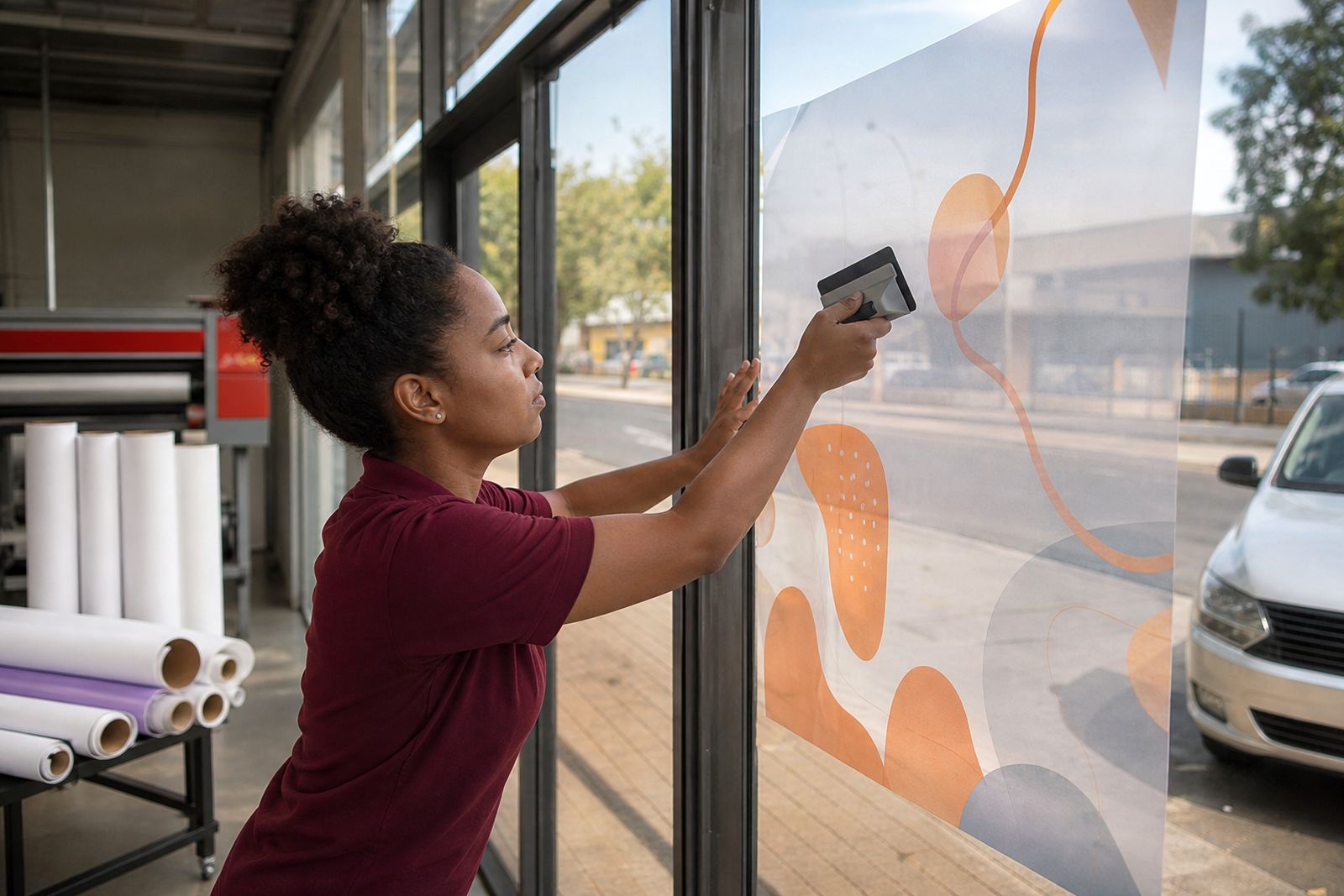
Across South Africa these rolls are regularly used for estate boards, safety signage, retail window promotions, temporary building signage, branded panels, wayfinding, municipal notice boards and outdoor decals on smooth equipment covers. Polymeric material is often a safer call where the graphic must stay presentable through stronger sun cycles and seasonal rain, or where the face has a slight bow rather than a dead-flat sheet.
They are less suited to rough brick, unsealed timber, powdery paint, low-surface-energy plastics and surfaces that flex a lot during use. For wall graphics indoors, a dedicated wall film is usually the better route. For small product labels cut on narrow equipment, a different media format may be more practical than a full wide-format roll.
- Flat aluminium composite panels and sealed sign board faces.
- Smooth painted metal and glass where proper cleaning can be done.
- Gentle curves and mild contours when a polymeric grade is selected.
- Not for deep channels, rivets, rough masonry or flaky painted surfaces.
Print room and installation notes that matter outdoors
Outdoor graphics fail early most often because of process shortcuts rather than the film itself. Solvent and eco-solvent prints need enough drying and outgassing time before lamination, otherwise trapped solvent can lead to edge curl, silvering or adhesive issues later on. Latex and UV jobs have their own handling needs, especially where ink laydown is heavy and the print will sit in direct afternoon sun.
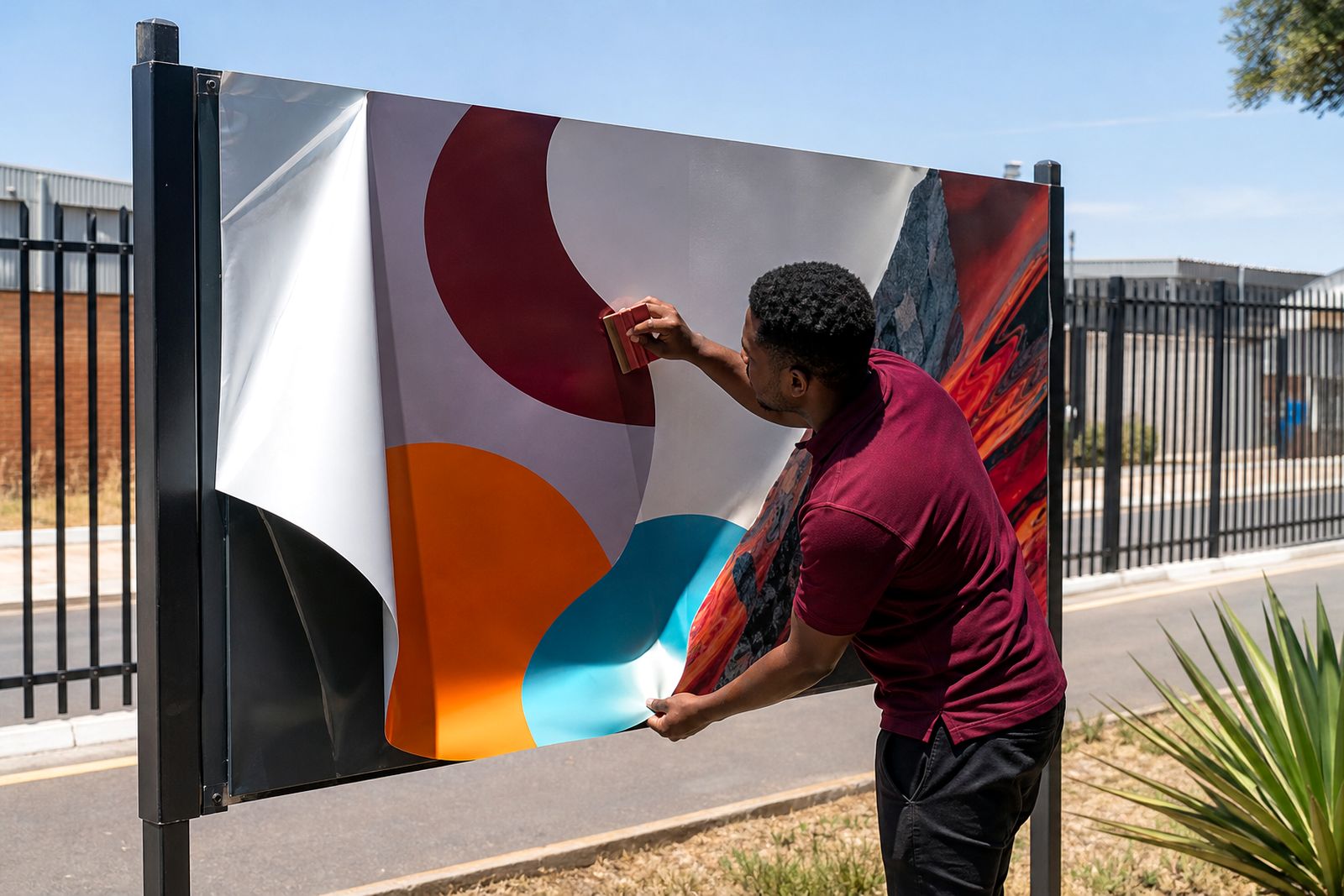
Application should happen on a clean, dry surface with dust, polish, silicone residue and grease fully removed. In coastal towns, salt residue and moisture can catch installers out, particularly on glass and metal near the sea. On-site fitting works best when the substrate temperature is moderate and the panel is not baking hot. If a sign face has joins, screw heads or rough cut edges, tell us that upfront because it affects film choice and whether a laminate is advisable.
Looking after the finished graphic
Once fitted, outdoor printable vinyl needs fairly ordinary care. Wash with a mild non-abrasive cleaner and a soft cloth or sponge. Avoid harsh solvents, aggressive scouring pads and high-pressure washing directly at edges or corners. Laminated prints usually stay easier to clean where road grime, hand marks or light scratching are expected.
Regular checks are worthwhile on exposed edges, lower corners and any point where water can sit. A panel mounted in full western sun will age differently from one under a canopy, and the same applies between dry Highveld conditions and humid coastal air. That is normal, not a fault, but it does mean the right grade at ordering stage makes a real difference.
- Clean with mild detergent and soft materials only.
- Keep pressure washing away from edges and overlaps.
- Inspect corners and joins on signs that face hard weather.
Useful details to send with your enquiry
When you contact us through our contact form, include the printer ink set, the roll width you prefer and whether the graphic is going onto a flat panel, glass, painted metal or a gently curved face. It also helps to say if the sign will be inland or coastal, short campaign or longer outdoor display, and whether you need gloss or matt plus a matching cold overlaminate.
If you already know the finished panel size, estimated square metres and whether contour cutting follows printing, include that too. We do not print artwork or supply printers, but we can help narrow down the most suitable roll for outdoor sign work, and save you from using a grade that is too light for the site. A quick note on the surface condition helps a lot, even if it's just "smooth glass" or "painted board with slight curve".
- Printer type and ink: eco-solvent, solvent, latex or UV.
- Required width: 1.07 m, 1.27 m, 1.37 m or 1.52 m if known.
- Surface type and whether it is flat or gently curved.
- Indoor-outdoor exposure, inland or coastal location, and laminate preference.
What our Printable Vinyl customers say
Verified Google reviews
Questions we get asked
Should I choose monomeric or polymeric vinyl for an outdoor sign?
If the graphic is going onto a flat panel for general outdoor use, monomeric vinyl is often the practical starting point. If the sign needs a neater hold for longer outdoor exposure or has a gentle curve, polymeric vinyl is usually the better option.
Can these rolls be used for vehicle graphics?
They can suit flatter vehicle sections or smooth panels where the shape is mild, especially with a polymeric grade. They are not meant for deep recesses, strong compound curves or demanding full wraps.
Do I need laminate over outdoor printable vinyl?
Not every job requires it, but laminate is strongly recommended where the print will face abrasion, frequent cleaning, stronger UV exposure or edge handling. It also helps keep the surface easier to wash and maintain.
Also worth a look
Tell us about the job
Send sizes, materials and where you are through our contact form, and we will come back with the practical options.
Open the contact form