Vinyl guides
This section pulls the main vinyl decisions into plain working notes for print rooms, sign shops and small makers. Use it to narrow down the right roll, avoid common print issues and get cleaner application on the finished job.
Use these guides before you load a roll
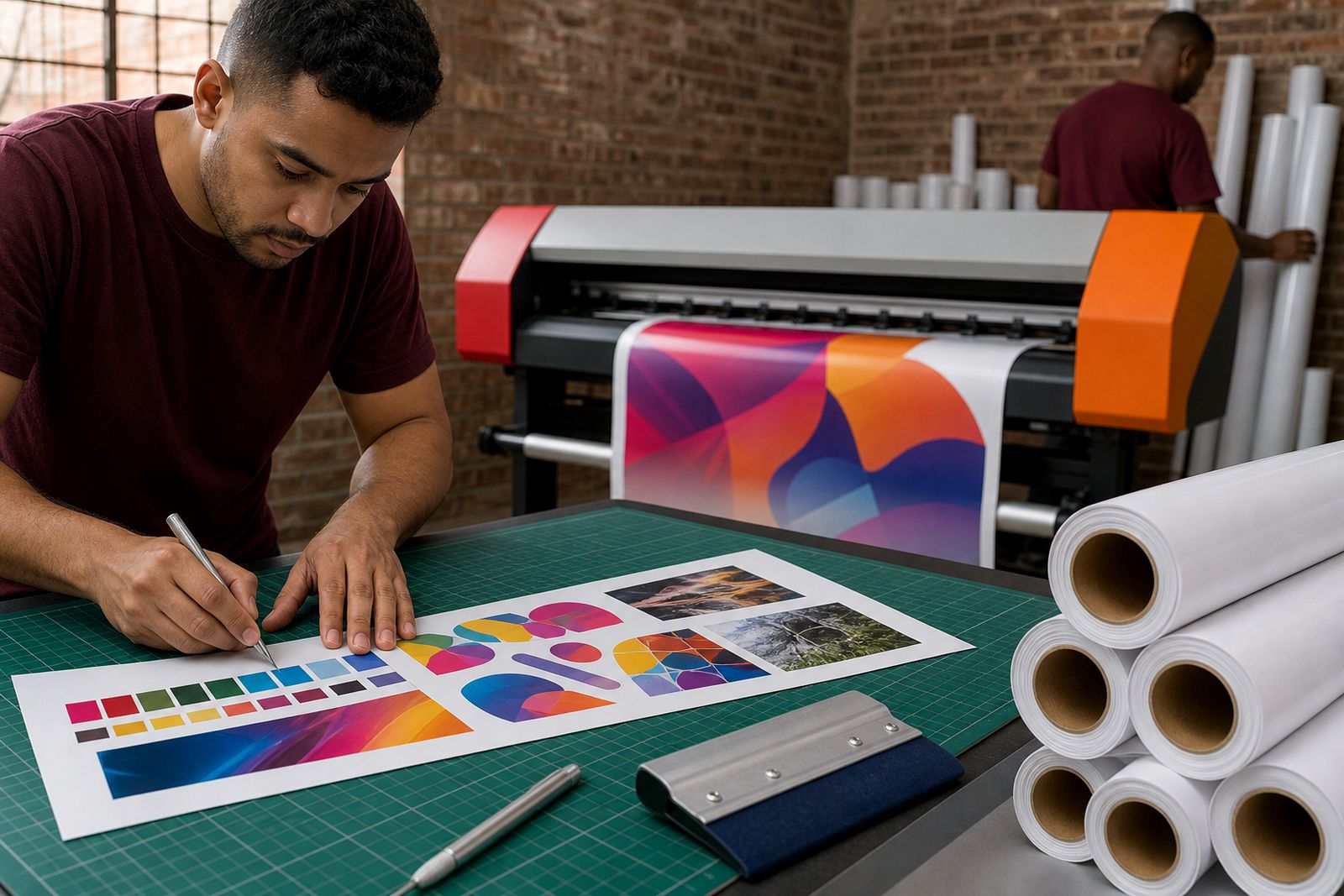
Printable vinyl looks straightforward until the job has to sit on a vehicle, wrap a wall panel or hold colour on a retail window. The guides in this section cover the three points that usually decide the result: which film grade fits the job, whether the printer and ink set match the material, and how the printed sheet is handled before lamination or fitting.
They are written for wide-format self-adhesive vinyl used on eco-solvent, solvent, latex and UV machines. You will find notes that help with gloss and matt white vinyl, clear vinyl, removable films, wall vinyl and outdoor grades, plus matching cold overlaminates where extra surface protection matters.
Start with the surface and the life of the graphic
The first choice is rarely colour or finish. It is usually the surface, how long the graphic needs to stay up, and whether the piece must remove cleanly later. A short in-store promotion on a smooth painted wall needs a different film from a decal that faces sun, rain and wash cycles on a panel van.
- Indoor display work often suits removable or wall vinyl where clean peel-off matters.
- Longer outdoor use usually points to monomeric or polymeric grades, depending on exposure and movement in the surface.
- Product labels and small decals often start with gloss or matt white vinyl, unless the design needs the substrate to show through.
- Window graphics and layered effects may need clear printable vinyl, with artwork planned around transparency.
- High-contact pieces benefit from a matching cold overlaminate to reduce scuffing and ink wear.
If the job brief is still loose, the indoor or outdoor question is the quickest way to trim the options. After that, look at the face finish, adhesive behaviour and whether lamination is part of the job.
A practical comparison for common roll choices
One roll does not cover every print room task. These broad comparisons help when you are deciding between materials that sound close on paper but handle quite differently once printed and applied.
- Gloss white vinyl gives stronger punch in colour and a sharper wet-look finish for decals, labels and promotional panels.
- Matt white vinyl cuts glare under lights and can suit interior signage where reflections spoil readability.
- Clear vinyl lets glass, acrylic or painted surfaces show through, but artwork needs careful planning because white areas do not behave like they do on white film.
- Removable vinyl is useful for shorter campaigns and seasonal graphics where a cleaner lift is expected at the end.
- Wall vinyl is aimed at indoor wall surfaces and usually handles differently from standard decal film.
- Monomeric outdoor vinyl fits many flat-surface exterior jobs, while polymeric grades are often chosen where a longer service life or better dimensional stability is needed.
Roll width matters too. Common widths such as 1.07 m, 1.27 m, 1.37 m and 1.52 m can affect panel joins, media waste and whether a graphic runs in one piece or needs splitting. That sounds small, but it changes labour on the floor.
Printing notes that save wasted media
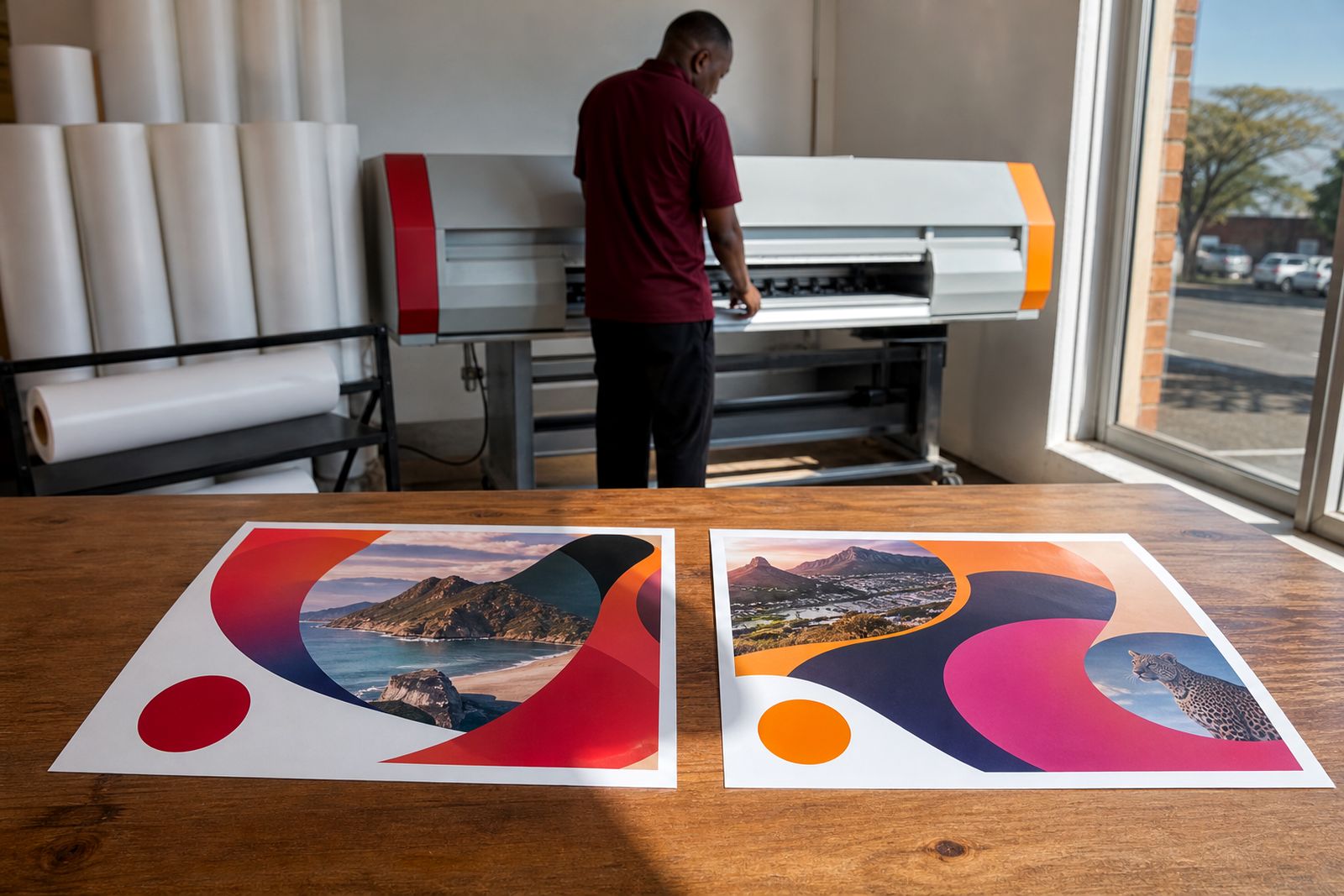
Good print results depend on more than loading the correct profile. Solvent-family inks, latex and UV each interact with vinyl and adhesive layers in their own way, so the guides in this section point you toward the checks that matter before a full production run. Ink load, heater settings, cure levels and drying time all affect colour hold, handling and lamination.
One of the most common problems is moving too quickly from printing to finishing. A print can look dry on the surface and still need more time before trimming, rolling or laminating. Trapped solvents, edge lift and silvering are expensive little mistakes, and they tend to show up after the graphic has left the print room.
You will also find notes on matching media to eco-solvent, solvent, latex and UV equipment. We do not sell printers, but we can help you narrow the suitable vinyl roll for the machine and ink type already in use.
Application is where small habits show
A well-printed graphic can still look poor if application is rushed. Surface prep, temperature, pressure from the squeegee and the direction of laydown all show in the final panel. The application guide in this section focuses on bubble control, alignment and cleaner handling for decals, signs and window pieces.
- Clean, dry surfaces matter more than force during application.
- Flat panels are generally more forgiving than textured or low-energy surfaces.
- Felt-edged or suitable application tools help reduce scratches on the print face.
- Large panels usually go on better when planned around a hinge line or controlled release method.
- Lamination can improve handling stiffness on some jobs, which makes fitting easier as well.
In humid coastal conditions, storage and acclimatising the roll before printing can make a noticeable difference too. Vinyl that has sat in heat or moisture often behaves differently at the liner edge, and that catches operators out.
Where to go next in this section
If you already know the end use, start with the guide on choosing indoor or outdoor vinyl. If the question is more technical, go to printer and ink compatibility or the printing and drying notes for solvent-based work. If your issue appears only after fitting, the application guide is usually the right stop.
For product-specific reading, move from this hub to gloss and matt white vinyl, clear printable vinyl, removable and wall vinyl, outdoor monomeric and polymeric vinyl, or cold overlaminate film. If you want help matching a roll to a live job, send the material, surface and printer details through our contact form and we can point you in the right direction.
Explore the range
Choosing indoor or outdoor vinyl
Pick the vinyl grade by exposure, surface and expected life, then decide whether lamination is worth it.
Read more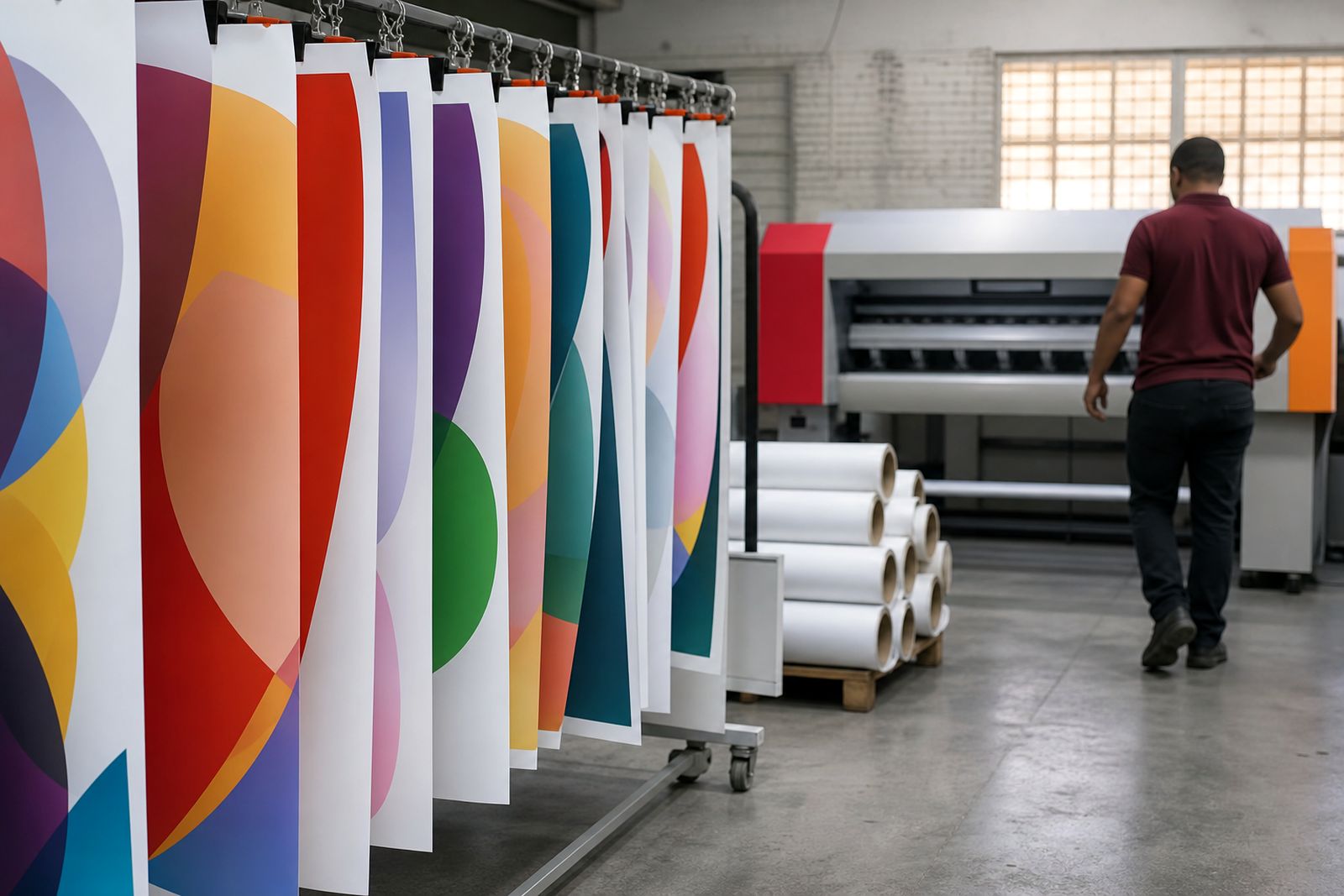
Printing and drying solvent vinyl
A practical drying guide for solvent-printed vinyl before cutting, packing or lamination.
Read more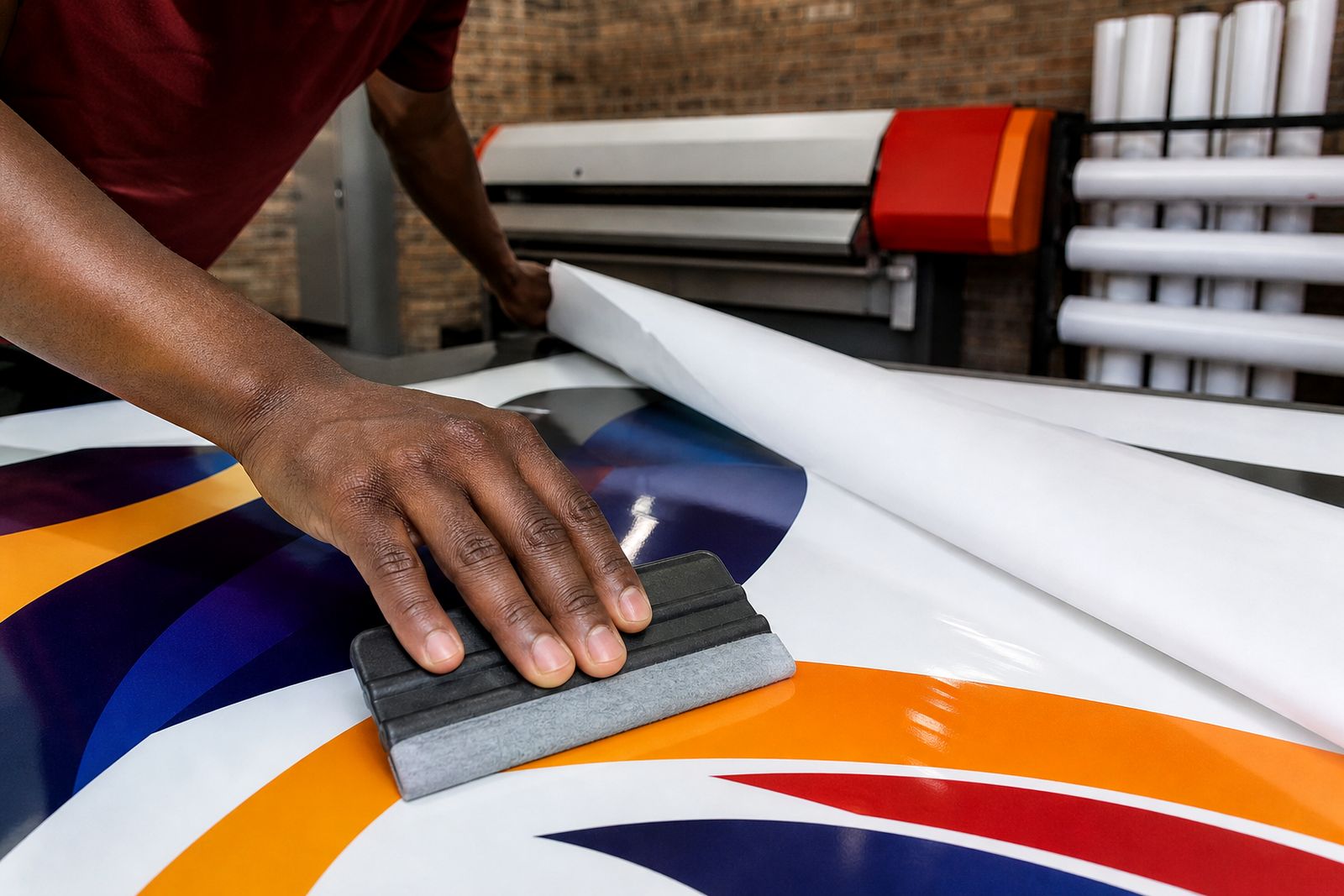
Applying vinyl without bubbles
Surface prep, hinge placement and measured squeegee strokes make bubble-free vinyl application far more consistent.
Read moreWhat our Printable Vinyl customers say
Verified Google reviews
Questions we get asked
Do these guides apply to hobby users as well as sign shops?
Yes. The notes are written plainly enough for smaller makers and artists, but they still cover the print and fitting details that matter in a production setting.
Will these guides tell me which printable vinyl suits my printer type?
They will help you narrow the options for eco-solvent, solvent, latex and UV printing, especially where drying behaviour and surface finish affect the job.
Do the guides cover laminating printed vinyl?
Yes. Where lamination changes durability, scuff resistance or handling during application, the guides point out when a matching cold overlaminate is worth using.
Tell us about the job
Send sizes, materials and where you are through our contact form, and we will come back with the practical options.
Open the contact form