What printable vinyl is used for
Printable self-adhesive vinyl is used across retail, branding, décor and short-run custom work. This page maps the main application groups so you can match the roll, finish and adhesive to the surface and the life of the graphic.
Where printable vinyl earns its place
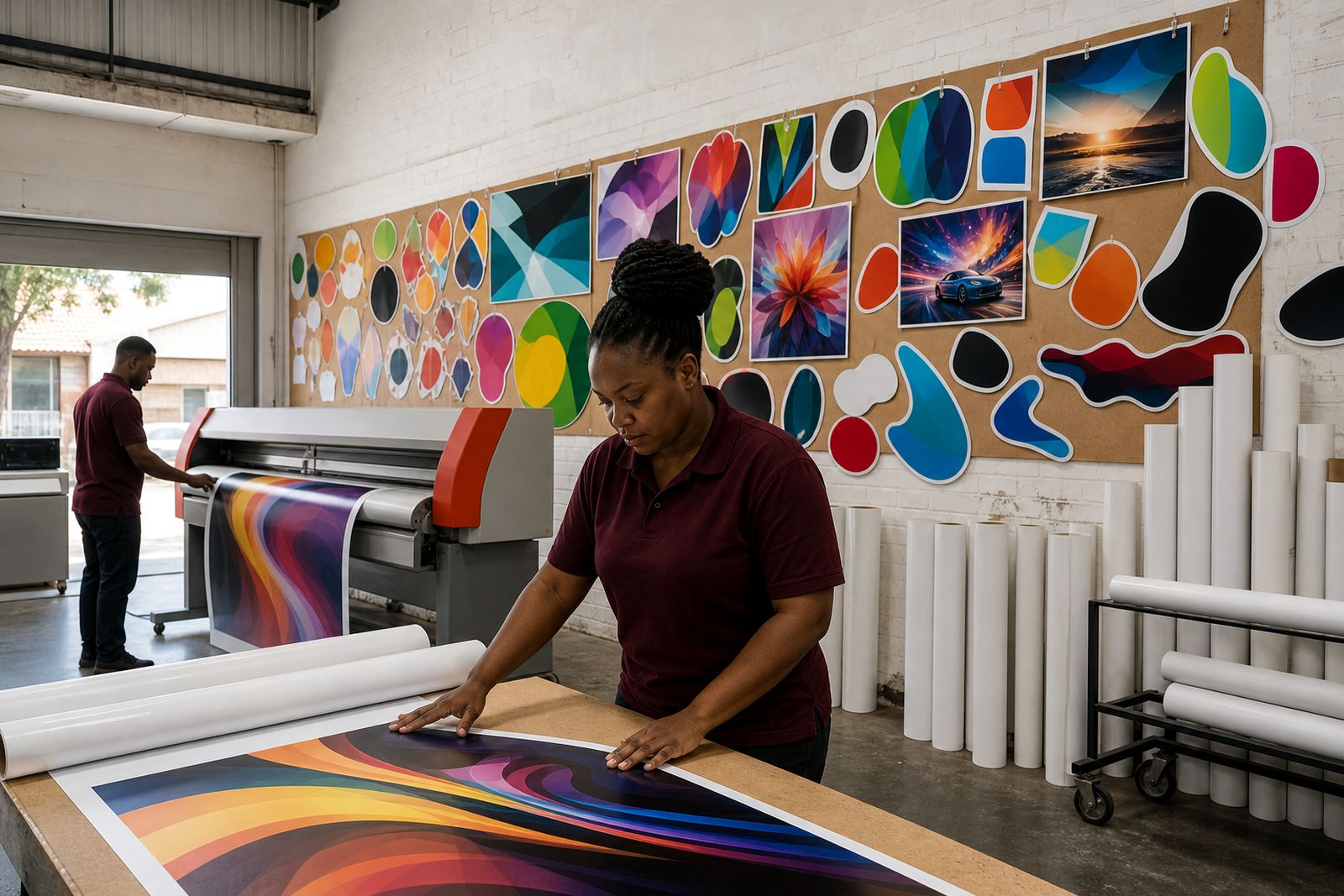
Wide-format printable vinyl is chosen when the job needs colour, shape and adhesion in one material. A printed graphic can be contour cut for decals, trimmed into product labels, mounted to glass, applied to flat sign panels or laid onto smooth painted walls. For South African shops and studios, the appeal is flexibility: one printer platform can cover promotional labels, point-of-sale signs, vehicle stickers and window branding without changing the whole workflow.
Not every roll suits every task. Indoor labels do not need the same face film and adhesive behaviour as a panel on a bakkie door that stands in sun and rain. A wall mural has different needs from a clear window graphic, and a laminate matters more on high-touch work than on a short event notice. That is why this section focuses on application first, then material choice.
Decals and labels for short runs and custom work
Printable vinyl is a good fit where quantities vary, artwork changes often or small batches need a clean finish. Makers use it for packaging labels, laptop decals, bottle labels and promotional stickers. Print studios use it for branded handouts, shelf talkers and cut decals for counters, tills and displays. White gloss tends to show colour strongly, while matt can reduce glare under shop lighting.
- Product labels for jars, bottles, tubs and boxes
- Contour-cut decals for laptops, helmets, notebooks and gift packs
- Promotional sticker sheets for events, pop-ups and artist packs
- Short-run branded labels where artwork changes from batch to batch
For labels handled often, a cold overlaminate can help with scuffing and moisture. Clear printable vinyl is useful where the container colour should show through, but artwork and adhesive need to be planned carefully so edges and backing colour do not spoil the final look.
Windows and glass need a different approach
Glass applications ask for more thought than many people expect. Storefront hours, sale graphics, privacy bands and full-colour promotional panels all sit in the same broad category, but the viewing direction and amount of light behind the glass can change the result quite a bit. On office glazing in Germiston or a street-facing shopfront in Durban, glare and heat can affect how graphics read from outside.
White printable vinyl gives solid coverage and is often used when the message must read clearly at a distance. Clear printable vinyl is chosen when the glass should remain visible and the printed image can sit lighter on the pane. On windows that are cleaned often or touched by the public, a matching overlaminate is worth considering, especially near handles and entrance doors.
Vehicles, outdoor panels and weather exposure
Outdoor work places the highest demand on printable vinyl. Vehicle markings, trailer panels, temporary fleet branding, pavement sign faces and estate boards all face sun, water, washing and road grime. For these jobs the difference between monomeric and polymeric grades matters. A shorter-term flat panel can often use one approach, while a vehicle side or longer-running sign usually calls for a more stable film.
- Use outdoor grades where the graphic sits in direct sun or rain for extended periods
- Choose polymeric material for better stability on work expected to stay up longer
- Add cold overlaminate where abrasion, handling or regular cleaning is expected
- Keep removable wall products for indoor painted surfaces, not exterior signboards
It helps to think about panel shape as well. A flat aluminium composite board is one thing. A vehicle recess, slight curve or riveted panel is another. Even when the print looks good off the machine, the service life on the road depends on using the right film and adhesive for the shape.
Walls, indoor signs and display graphics
Printable vinyl is also widely used indoors where change-outs are frequent. Reception logos, seasonal retail graphics, wall messages, exhibition panels and wayfinding signs can all be produced from wide-format rolls. Removable and wall vinyl are popular when the aim is clean presentation on smooth painted surfaces without the aggressive grab of a permanent adhesive.
Indoor sign work often prioritises finish and installation ease over long outdoor life. A matt face film can suit office walls and gallery settings where reflections are a problem, while gloss may suit bright retail promotions that need extra punch. Surface condition still matters though: fresh paint, dusty walls and textured plaster can affect bond strength a lot, and it catches many people out.
A practical way to choose the right roll
Start with the surface, then the environment, then the expected life of the graphic. If the job is on glass, ask whether it should look solid or see-through. If it goes outdoors, ask how long it needs to hold colour and shape. If it is for an interior wall, ask whether removability matters more than maximum tack. Those few questions narrow the choice faster than starting with finish alone.
- Choose gloss or matt white when you need strong print visibility on an opaque base
- Choose clear vinyl when the surface should remain visible through the print
- Choose removable or wall vinyl for indoor décor and short-term interior campaigns
- Choose outdoor monomeric or polymeric vinyl for external signs, windows and vehicles
- Choose cold overlaminate when the print needs extra protection from scuffing, water or cleaning
If you are comparing options for a specific application, the pages in this section break them out by use case. For help matching a roll to your printer, ink set and surface, send the job details through our contact form and include the application, width and finish you have in mind.
Explore the range
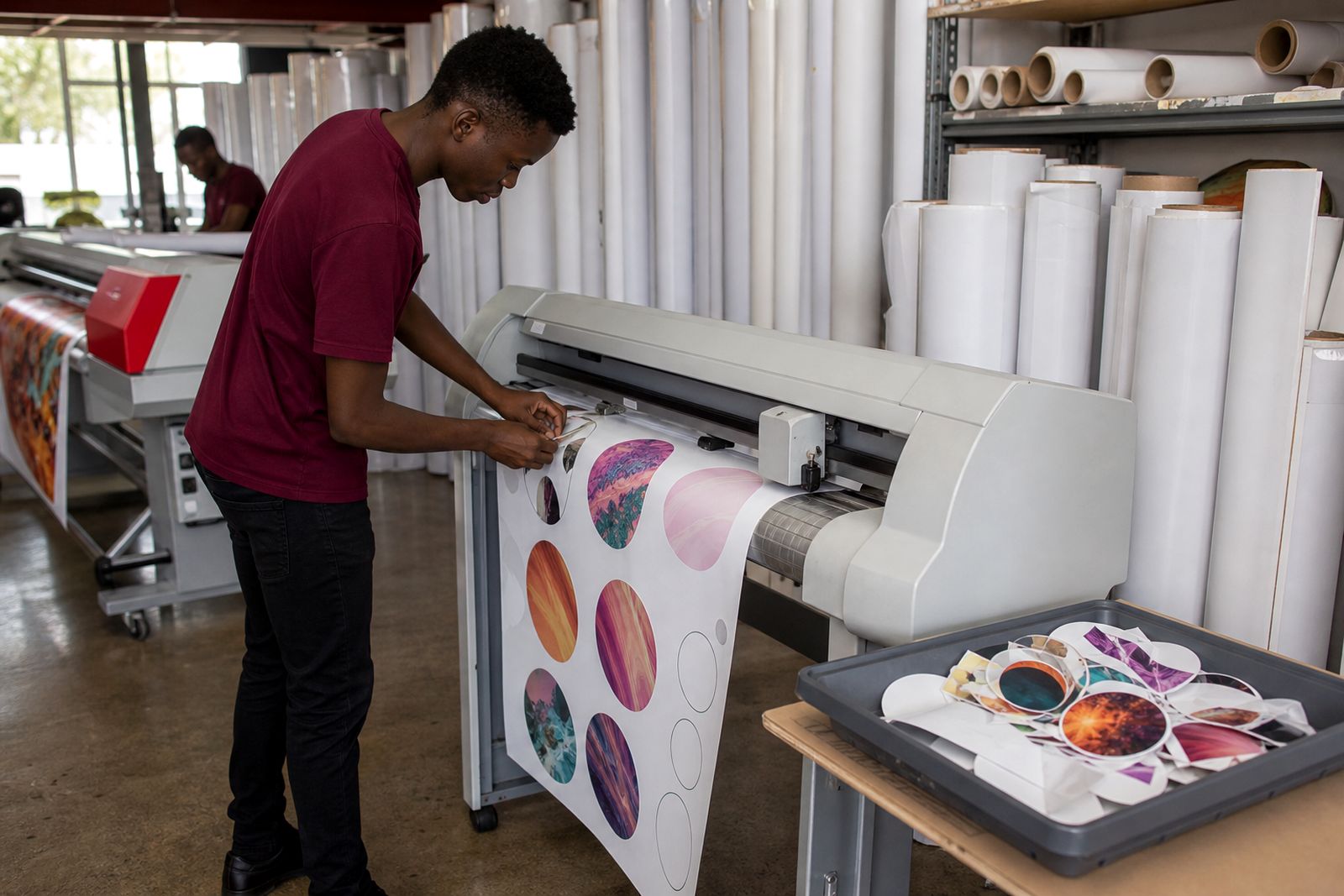
Decals and product labels
Printable vinyl for contour-cut stickers, label sheets and short-run branded packs across South Africa.
Read more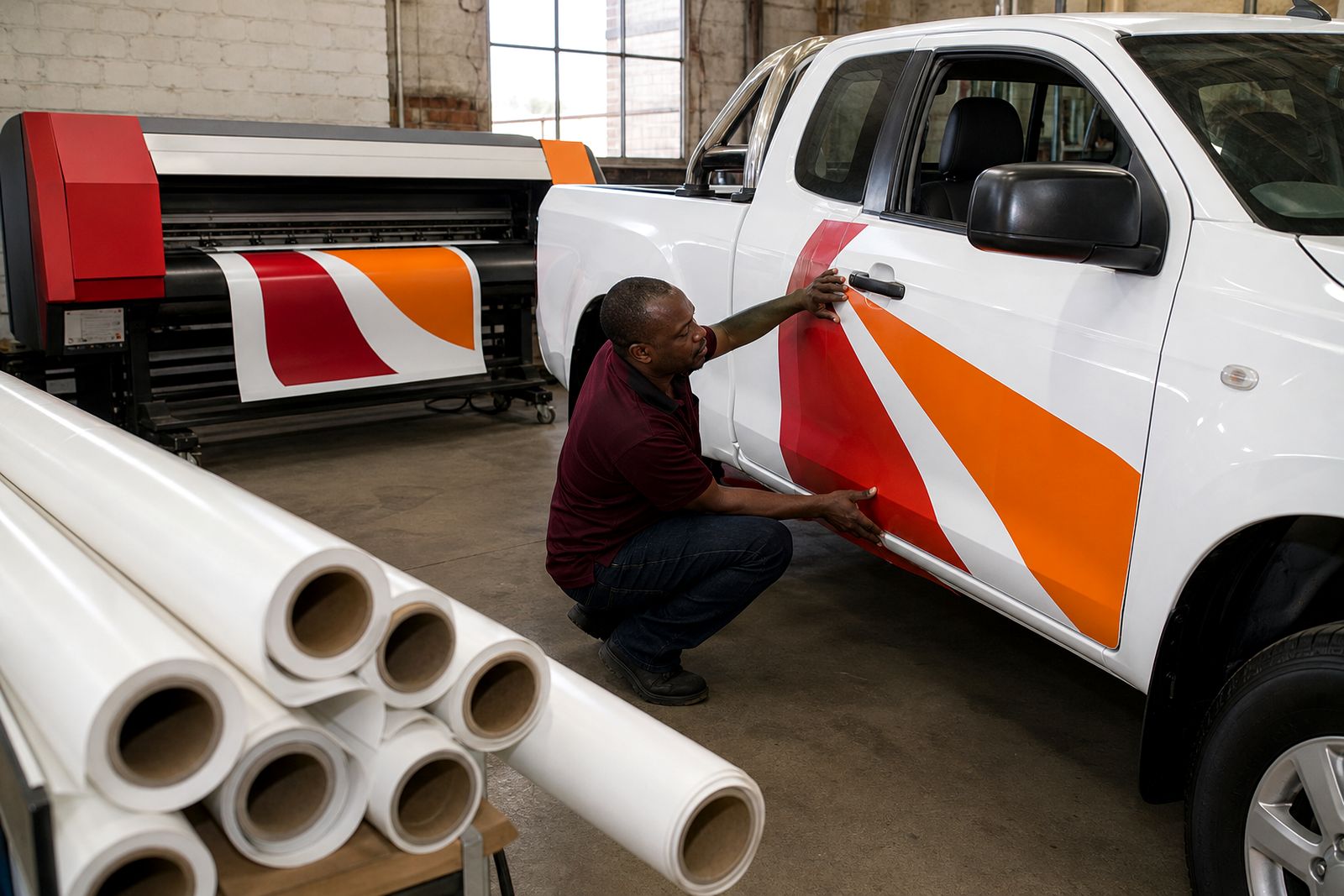
Vehicle and window graphics
Material choice matters on cars, vans and glass where heat, edges and viewing angles can ruin an otherwise clean print.
Read more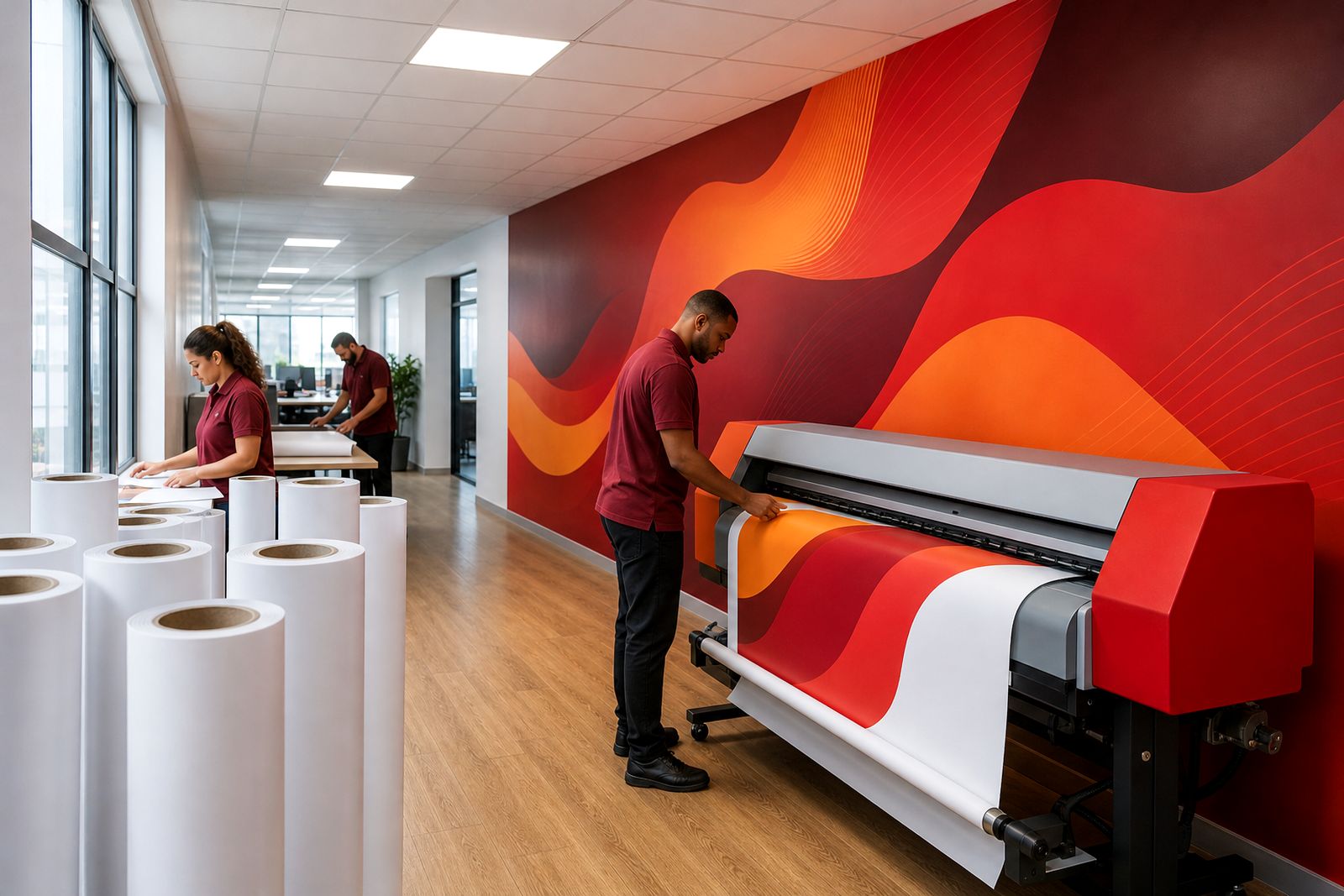
Indoor signs and wall graphics
Practical notes on printable vinyl for interior wayfinding, wall murals and point-of-sale graphics.
Read moreWhat our Printable Vinyl customers say
Verified Google reviews
Questions we get asked
Can one printable vinyl roll be used for every application?
Usually not. A label on a jar, a wall quote in an office and a graphic on a vehicle panel place different demands on the film and adhesive, so the best choice depends on surface, exposure and expected life.
Do I always need an overlaminate?
No. Indoor graphics with light handling may not need one, but labels, window graphics near door handles and outdoor prints often benefit from a cold overlaminate for extra protection and easier cleaning.
Is clear printable vinyl better than white vinyl?
It depends on the job. Clear vinyl is useful when the background should remain visible, while white vinyl gives stronger opacity and colour impact for decals, signs and many label applications.
Tell us about the job
Send sizes, materials and where you are through our contact form, and we will come back with the practical options.
Open the contact form