Decals and product labels
Decals and product labels ask different things from a printable vinyl roll than a wall graphic or a window sticker. The job is usually smaller, closer to hand and judged at arm's length, so the face film, adhesive and finish matter straight away.
Where decal work differs from general sign printing
A sign panel can be read from a few metres away and still do its work. A product label sits on a jar, bottle, sleeve or box where every edge, colour shift and silvering mark shows up fast. That is why decal and label jobs often lean toward smoother white printable vinyl, cleaner liner release and a finish that suits close viewing.
For many South African makers, the run size is not huge. One week it is a batch of coffee bag stickers for a market in Johannesburg, the next it is branded candle labels heading to Durban where coastal humidity changes how stock is packed and stored. The printable film needs to feed well on a wide-format machine, dry properly for the ink set being used, then cut neatly without lifting corners.
In this kind of work, the vinyl is only one part of the result but it is the part that carries nearly every mistake. A film that curls too much after printing or feels too soft for a small contour shape can turn a tidy run into a frustrating one.
Choosing a face film for labels people handle
White printable vinyl is the usual starting point for product labels because it gives solid colour, readable small text and a clean base for contour cutting. Gloss white often suits bright retail-style graphics and stronger colour pop. Matt white is popular where glare is a problem, or where a softer finish suits handmade goods and boutique packaging.
Clear printable vinyl has its place too, especially where the container colour must show through or where the label should feel less obvious on glass or acrylic. Clear films need more care in artwork setup though, particularly with pale colours and fine type. Not every design that looks good on a screen will hold its weight once printed onto a transparent film.
- Gloss white works well for bright decals, barcode labels and higher contrast artwork.
- Matt white helps on hand-held packs where reflections can make fine print harder to read.
- Clear vinyl suits transparent bottles, windows and layered branding effects.
- Removable grades are useful for short-term promo labels or trial packaging.
Roll width matters more in a busy print room than people think. Common widths such as 1.07 m, 1.27 m, 1.37 m and 1.52 m let shops nest many small decals across the web, but the best width depends on the cutter setup, panel planning and how much waste the artwork shape creates.
Indoor packs, chilled shelves and outdoor sticker runs
The end use should settle the material choice before the first test print. Indoor product labels for dry retail shelves do not need the same face film and adhesive behaviour as bottle labels that may see condensation, cooler boxes or transport in hot delivery vans on the East Rand. A promotional decal for a laptop lid is different again.
Monomeric printable vinyl is often enough for straightforward indoor labels and general decals where the surface is flat and the service conditions are mild. For tougher use, longer display periods or jobs exposed to more weather and handling, polymeric grades can be the safer route. The film usually sits flatter and handles demanding conditions with less fuss, even if the job is small.
- Dry shelf labels normally have fewer material demands than outdoor decals.
- Bottles and jars handled often benefit from lamination and a more stable film.
- Cooler or coastal conditions can expose weak adhesive choices quite quickly.
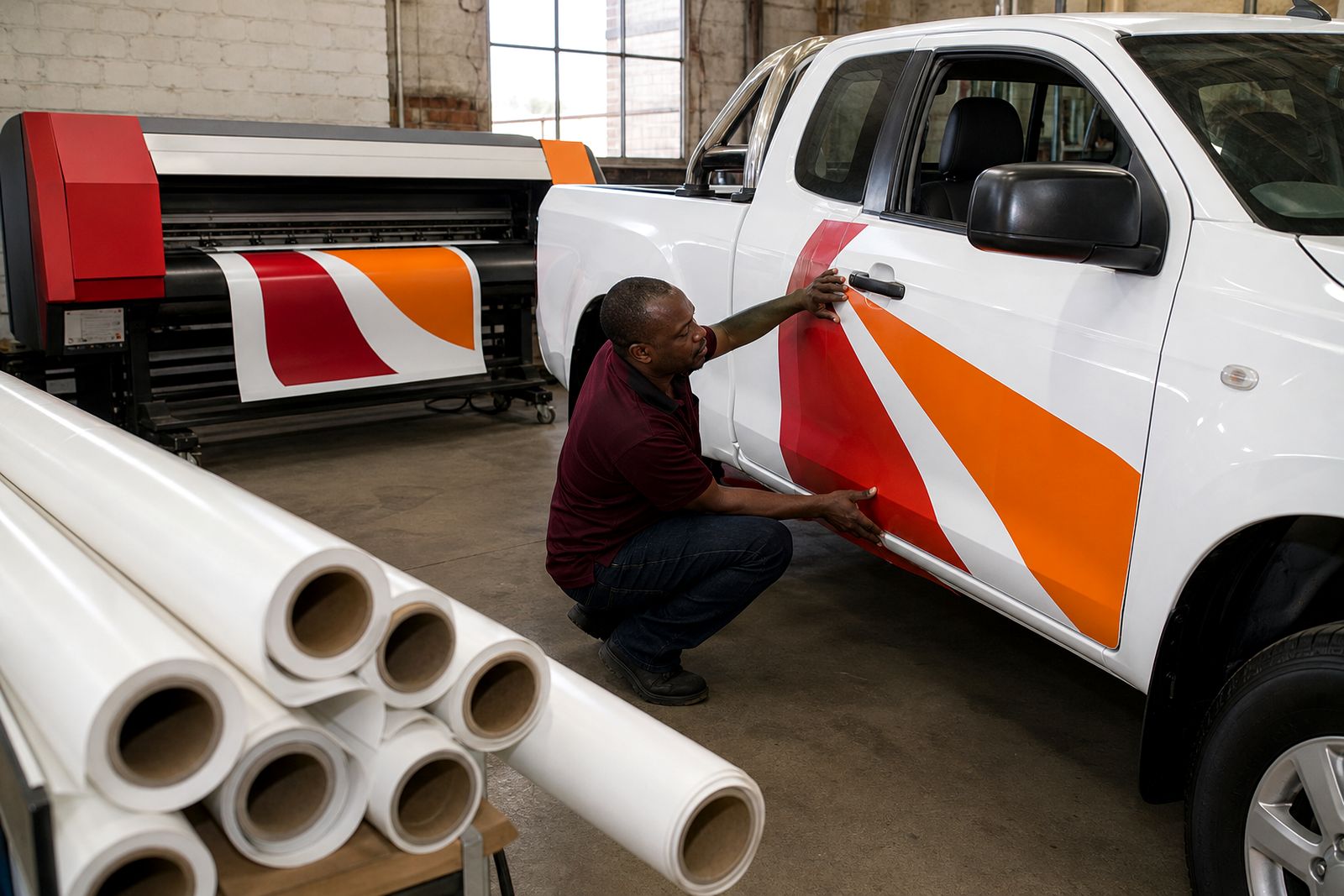
- Vehicle handout decals need outdoor-grade vinyl, not an indoor shortcut.
Not every maker needs the highest grade on every run, and that is where sensible selection saves waste. The right roll is the one that matches the real use, not the one with the longest spec sheet.
Contour cutting, weeding and the edge that gives everything away
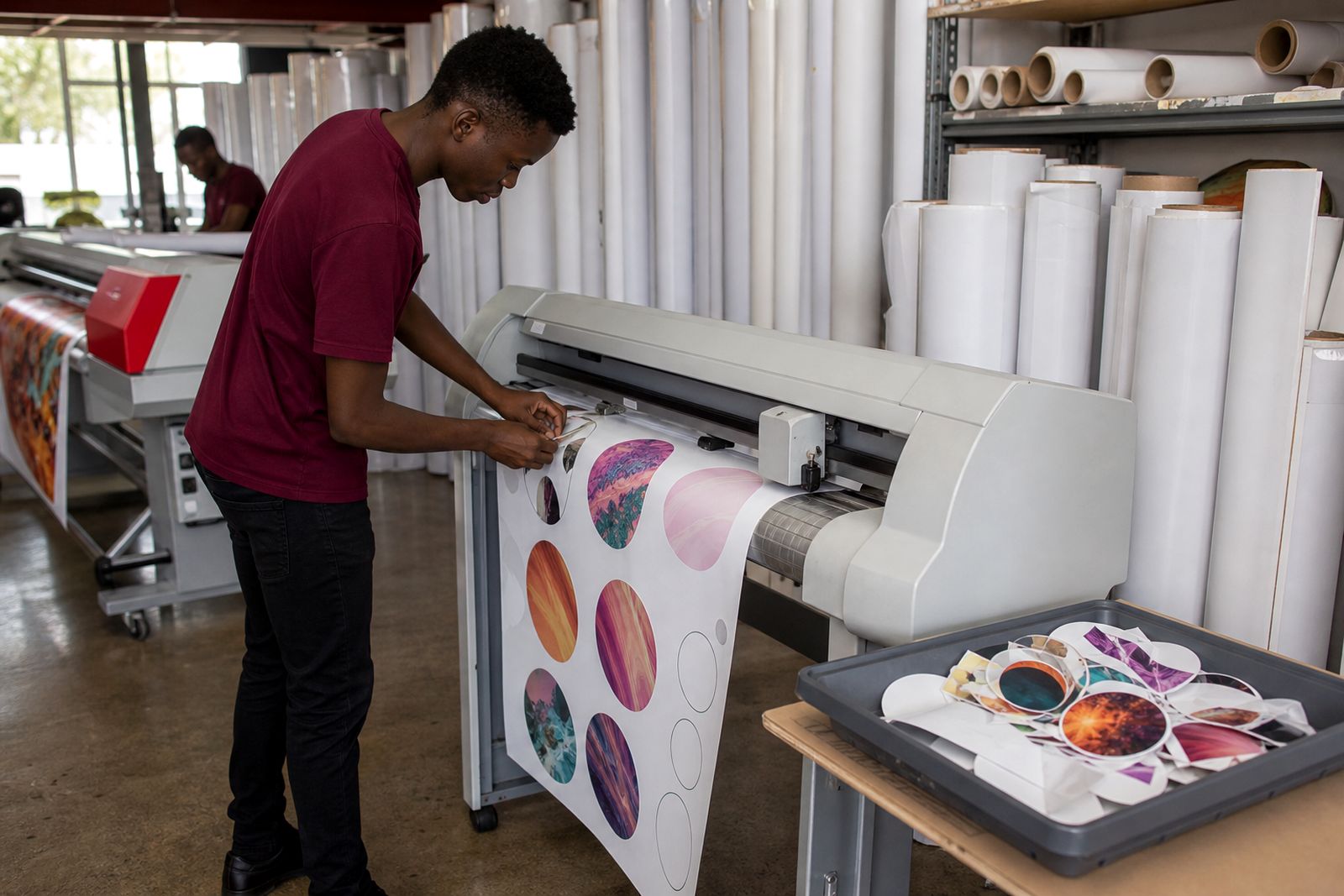
Small decals live or die by the cut line. A good print on the wrong film can still weed badly, especially on tiny circles, narrow text outlines and kiss-cut sheets where the operator needs consistent release. If the face stock stretches too easily or the liner does not stay flat after printing, the cut edge can look ragged even when the blade and pressure are set properly.
For contour-cut label sheets, many workshops want a vinyl that stays stable after eco-solvent, solvent, latex or UV printing so registration remains trustworthy. Drying time and outgassing still matter on solvent-type ink sets before lamination and cutting, otherwise the finish can trap issues that only show later.
Cold overlaminate film is worth considering where decals will be rubbed, washed or handled a lot. It can improve scuff resistance and keep colours looking cleaner on shelf-ready sticker packs. For a simple indoor maker label, lamination may be unnecessary. For bottle labels, tool case stickers or promotional decals passed around at events, it usually earns its place.
A workshop example from the East Rand
A small Germiston workshop needed short-run sticker sheets for handmade bath products sold through weekend markets and a few local shops. The labels included round jar-top stickers, front panel decals for amber bottles and a handful of window decals for the market display. The printer in use could run more than one ink type across different jobs, so the main concern was choosing a printable vinyl that would stay predictable through print, lamination and contour cutting.
The jar-top pieces were done on matt white printable vinyl to keep reflections down under indoor lights. The bottle decals moved to a glossier white face stock because the artwork used deep colour blocks and needed extra punch. For the display window decals, clear printable vinyl made more sense so the branding did not sit like a white patch on the glass.
The job only worked once each application was treated separately. One roll for every task would have looked convenient on paper, but it would have left compromises all over the run. After test cuts and a few tweeks to the contour path, the sheets weeded cleanly and packed flat, which matters when labels are being applied by hand at the end of a long production afternoon.
Practical points before you order rolls for label work
If you are buying printable vinyl for decals or product labels, it helps to describe the real job rather than only the machine model. Surface type, finish preference, whether the labels will be laminated and how the finished pieces are handled all affect the roll choice. A label on a soap sleeve is not the same as a sticker for a bakkie window, even when both are cut from white vinyl.
- Say whether you are printing on eco-solvent, solvent, latex or UV equipment.
- Note if the job is kiss-cut sheets, individual contour-cut decals or full panels.
- Mention the surface: glass, painted board, plastic tub, carton, jar or metal lid.
- State if you need gloss, matt, clear, removable or outdoor-grade material.
- Include whether a matching cold overlaminate is needed for handling or moisture.
Sticker Papers Pro supplies printable self-adhesive vinyl rolls for this type of work and can help narrow the options for sign shops, print studios, makers, artists and hobbyists around South Africa. If you need help matching a roll to decal sheets or product label runs, send the job details through our contact form with your print method, finish preference and intended use.
What our Printable Vinyl customers say
Verified Google reviews
Questions we get asked
Can printable vinyl be used for product labels on jars and bottles?
Yes, provided the roll matches the job. Flat indoor containers are usually straightforward, while bottles that get handled, chilled or exposed to moisture often benefit from a more stable film and, in many cases, a cold overlaminate.
Is clear printable vinyl suitable for all labels?
Not always. Clear film works well where the container should show through, but pale colours and small text can lose impact. It suits selected designs rather than every label layout.
Do I need laminate over contour-cut decals?
Only where the finished decal needs extra protection. Lamination is useful for frequent handling, scuff resistance and moisture exposure, but some short-run indoor labels are perfectly fine without it.
Tell us about the job
Send sizes, materials and where you are through our contact form, and we will come back with the practical options.
Open the contact form