Vehicle and window graphics
Vehicle and window graphics ask more of printable vinyl than many indoor jobs. Heat, washing, curved panels and long runs of glass all show up weak film choice very quickly.
Panels, glass and weather do not behave the same
A vehicle door, a bakkie canopy window and a shopfront pane may all carry printed graphics, but they place different demands on the film. Metal panels heat up hard in the sun, especially on darker vehicles parked outdoors in Gauteng. Glass expands differently, shows adhesive marks more easily and makes every trapped speck visible from both sides. A vinyl that sits neatly on an indoor wall can struggle badly on a panel line or a rear quarter curve.
For South African work, the first question is usually indoor or outdoor life, then the surface, then the ink set in the printer. Long exposure on a fleet vehicle in Pretoria, Durban or Upington is not the same as a short-term retail message on inside glass in a shopping centre. Picking by colour and finish only often leads to edge lift, shrinkage or poor handling on the laminator.
- Flat painted panels normally need a white printable vinyl with good dimensional stability.
- Short campaign windows can suit removable film where clean removal matters more than long outdoor life.
- Clear printable vinyl works where the glass itself should remain visible around the printed area.
- High-touch shopfront graphics usually benefit from a matching cold overlaminate for scuff resistance.
Door graphics need film that stays flat at the edges
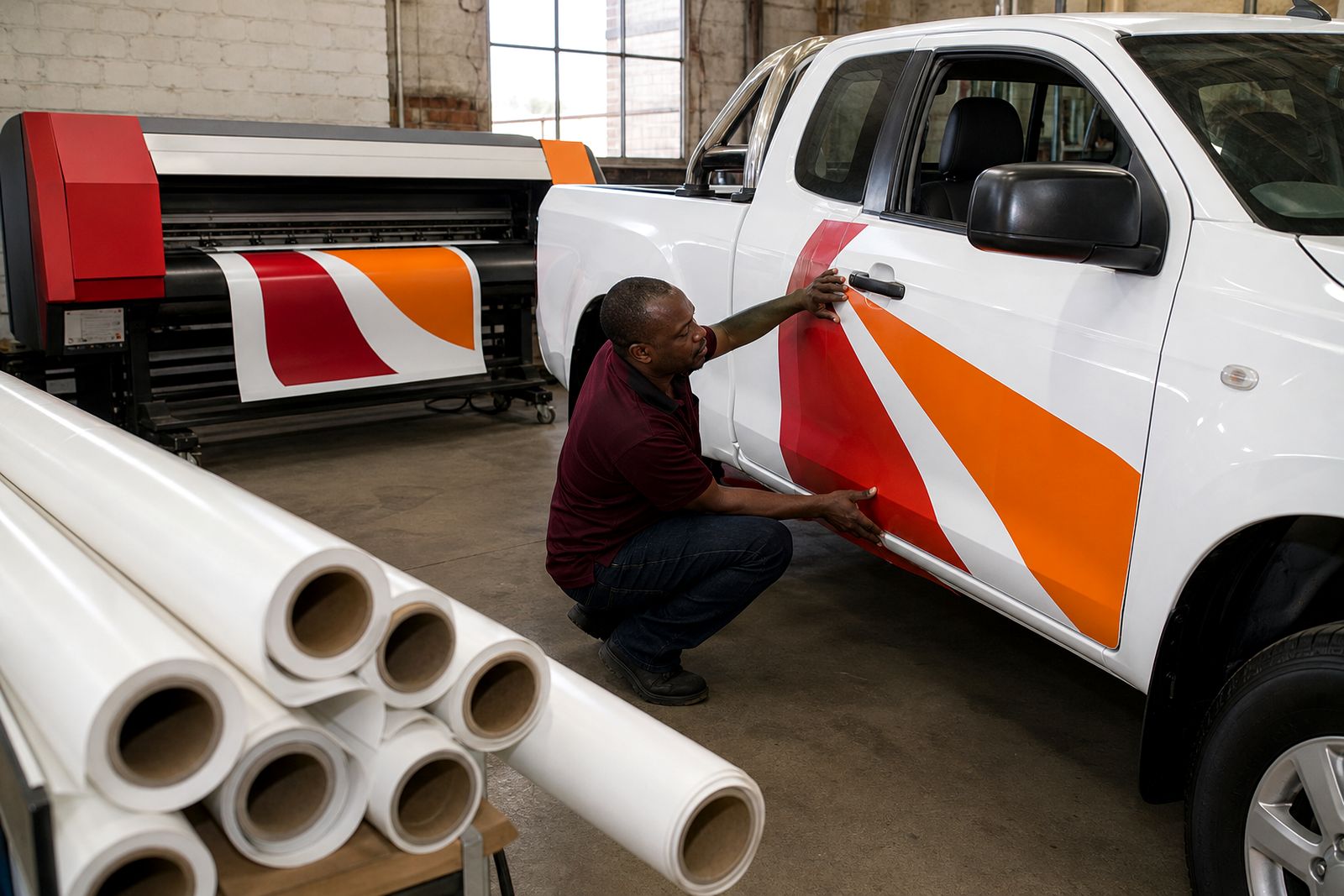
On door panels and side sections, the main pressure points are heat, wash cycles and recessed areas near handles or trim. Even when the panel looks flat from a distance, there are often shallow channels, badges, rubber seals and joins that can stress a basic film. For simple branding on flatter sections a general outdoor grade can work well, but once the job moves onto longer service life or cleaner finish expectations, a better outdoor film is normally worth using.
Print shops often ask whether monomeric or polymeric vinyl is the better route for vehicle sides. In practical terms, monomeric film is commonly chosen for straightforward flat or lightly curved work where the budget matters and the panel is not deeply shaped. Polymeric grades are usually the safer pick for neater long-term panel graphics because they shrink less and hold their shape better over time. That matters on a white delivery van left in the sun day after day where every edge line becomes obvious later.
- Use outdoor white printable vinyl for exterior door panels and side branding.
- Add cold overlaminate where the print faces regular washing, fuel splashes or abrasion.
- Allow proper outgassing where the ink system requires it before laminating or fitting.
- Avoid stretching basic film around recesses and expecting it to sit there happily.
Rear windows and shopfront glass need a different brief
Glass graphics are less forgiving than painted metal. Any silvering, trapped moisture or slight tunnelling can show under reflected light, and on clear panes you may see the job from both sides. For rear windows on work vehicles, visibility and legal considerations also matter. A full glass graphic is not just a print question. It is a fitting and use question too, and municipal or roadworthiness requirements may apply depending on the application and coverage.
On shopfront glass, people usually want one of two results: a clear printed message that reads sharply from outside, or a decorative layer that gives some privacy while still keeping the frontage open. Clear printable vinyl is useful where glass should still feel like glass. White vinyl gives stronger colour and opacity, which can be the better choice for promotions or permanent trading hours panels. Removable film is often the practical choice for seasonal campaigns, leasing situations or interior glass where change-outs are expected.
When the pane faces direct afternoon sun, adhesive performance becomes a real factor. Coastal humidity can also affect application conditions if the glass is not cleaned and dried properly first, and dust on busy pavement-facing fronts causes its own trouble.
A Germiston workshop example that shows the difference
One East Rand print studio took on a mixed run for a local trade customer: two delivery vehicles, a glass entrance and a set of internal office windows. The first thought was to run the same white printable vinyl across everything to keep the job simple. After measuring up and checking the surfaces, the workshop split the material choice instead.
The vehicle doors and tailgate sections were printed on an outdoor white vinyl and then protected with cold overlaminate. The exterior shopfront message went onto white film as well because colour strength mattered more than transparency. For the internal office windows, the studio changed to a removable option so the tenant could update promotions later without scraping for hours. A small area of clear film was used on a reception pane where the business wanted a lighter, less blocky look.
Nothing in that job was unusual, but the decision to separate the materials saved rework. The operator also left enough drying time before lamination, which stopped the milky look that can show when jobs are rushed. It sounds obvious, yet this is where many workshop problems start.
Matching film to printer and laminate
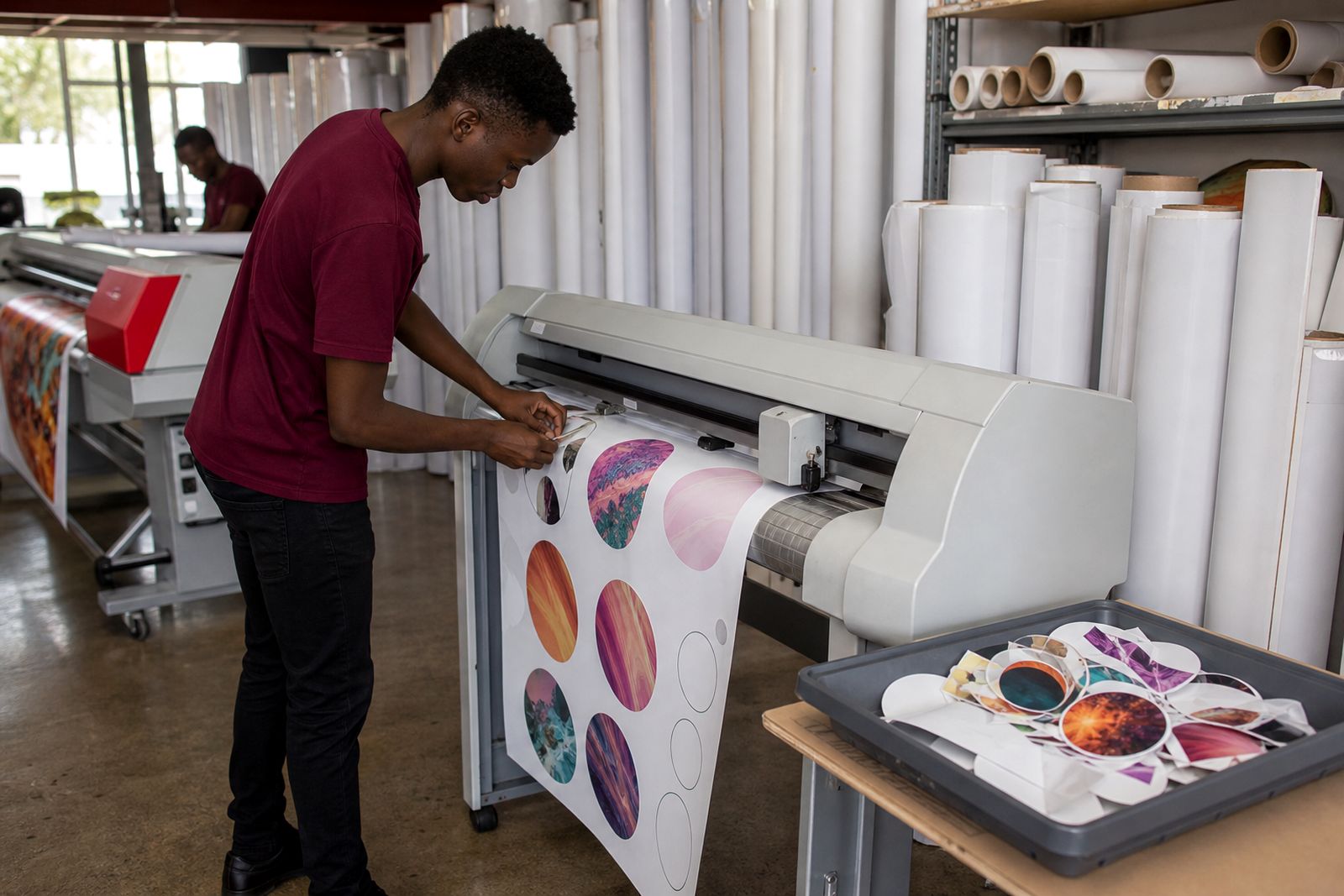
Printable self-adhesive vinyl is only part of the result. Ink type and the laminate choice have to line up with the job. We supply rolls for eco-solvent, solvent, latex and UV printer setups, and each shop has its own handling habits. Some operators want a gloss finish that lifts colour on vehicle branding. Others prefer matt to cut reflection on glass partitions or darker shopfronts.
Common widths such as 1.07 m, 1.27 m, 1.37 m and 1.52 m are regularly used for vehicle sides, windows and longer retail runs. The right width reduces joins, waste and awkward trimming at the fitting stage. For many sign shops, that is just as important as the film grade itself.
- Gloss white vinyl suits bright branding and promotional graphics.
- Matt white vinyl can soften glare on indoor glass and darker viewing angles.
- Clear printable vinyl is useful for lighter visual impact on windows.
- Cold overlaminate adds surface protection and can match gloss or matt finish preferences.
We do not print graphics for clients, prepare artwork or sell printers. The work here is supplying the rolls and helping buyers match a printable film to the application, printer type and expected service life.
Questions worth settling before you order the roll
A clean order for vehicle and glass work starts with a few practical details. Not every print studio needs a long technical brief, but knowing the surface, duration and finish avoids the usual mistakes. A rear window campaign for a month is different from permanent side branding on a plumbing van, and both differ from a removable special on interior glass in a mall passage.
- Is the graphic going onto painted metal, exterior glass or interior glass?
- Will it sit indoors, under cover, or in full outdoor sun and rain?
- Does the film need to remove cleanly later, or stay put for the long haul?
- Are you printing on eco-solvent, solvent, latex or UV equipment?
- Do you want gloss or matt, and is laminate part of the brief?
Sticker Papers Pro works from Germiston and sends printable vinyl rolls to sign shops, print studios, makers, artists and hobbyists across South Africa. If you need help narrowing down white, clear, removable or longer-life outdoor film for vehicle panels or glass, send the job details through our contact form and we will point you to the most suitable roll.
What our Printable Vinyl customers say
Verified Google reviews
Questions we get asked
Can I use the same printable vinyl on a van door and a shopfront window?
Sometimes, but not always. A film that performs well on a flat painted panel may not give the best result on glass, especially where transparency, clean removal or reflected light are part of the job.
Is laminate necessary for vehicle graphics?
For many exterior vehicle jobs, laminate is a sensible extra because it helps with abrasion, washing and general weathering. The need depends on the film, ink set and how hard the graphics will be used.
Do you print and fit vehicle or window graphics?
No. We supply wide-format printable self-adhesive vinyl rolls and matching cold overlaminates for print shops, studios and other users who handle the printing and application themselves.
Tell us about the job
Send sizes, materials and where you are through our contact form, and we will come back with the practical options.
Open the contact form