Indoor signs and wall graphics
Indoor signs need more than good artwork. The vinyl has to suit the wall, the lighting, the foot traffic and the way the panel will be fitted on site.
Where indoor vinyl earns its keep
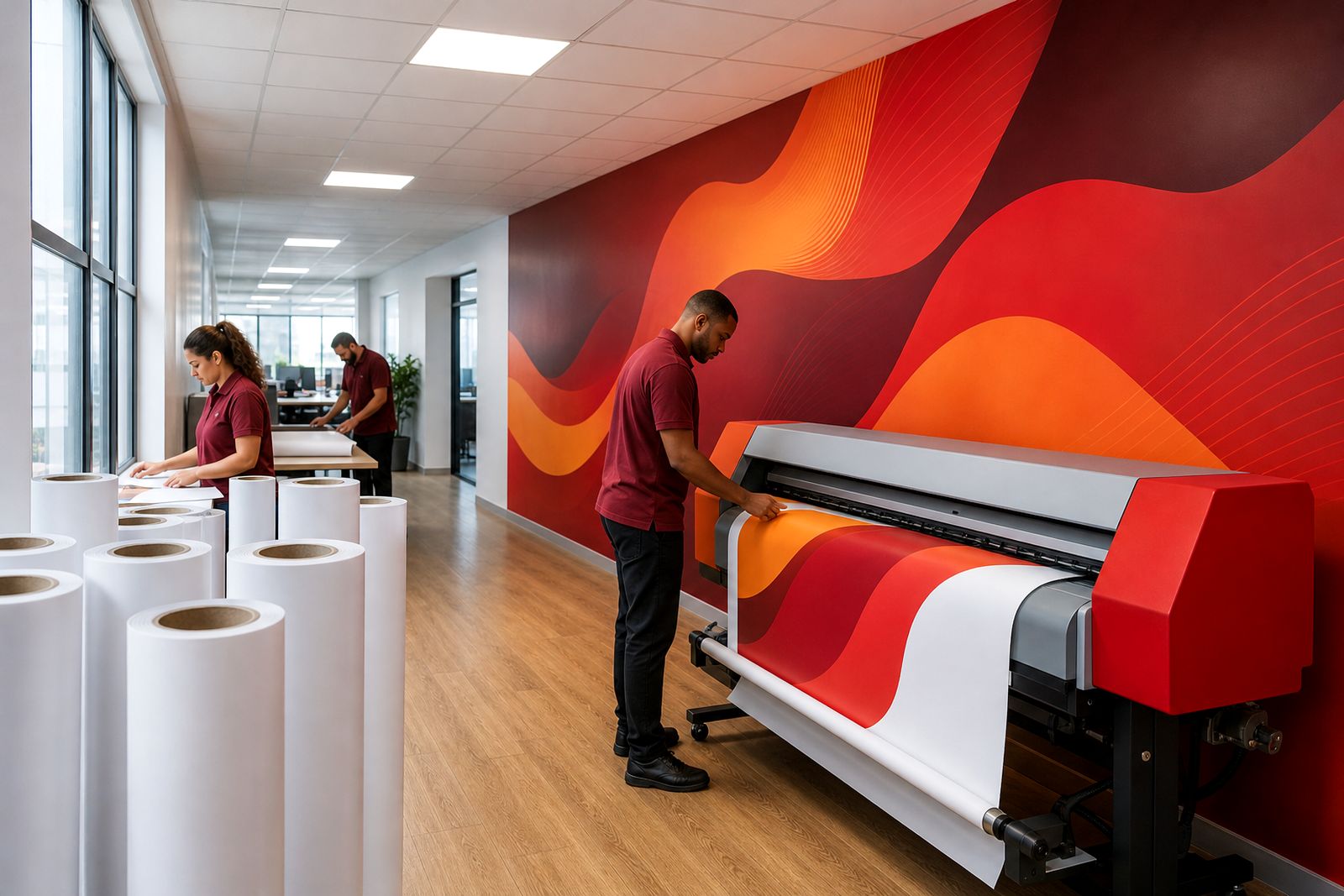
Indoor signs and wall graphics cover a wider spread of jobs than many buyers expect. One roll might be used for directional arrows in a medical practice, another for a retail feature wall, and another for short-run point-of-sale panels near a till point. The print method may stay the same, but the vinyl choice changes with the surface, the finish and how long the graphic needs to stay up.
In shopping centres and office buildings, neat wayfinding matters because people read signs at walking pace and from awkward angles. A glossy face can look bright under cool white lighting, while a matt face is often easier to read where there is glare from glass shopfronts or polished floors. For indoor feature walls, the main issue is usually how the print sits over joins and whether the adhesive will hold on low-sheen painted surfaces without lifting at the edges.
- Wayfinding for passages, reception areas and internal doors.
- Wall murals and branded feature panels in showrooms and studios.
- Point-of-sale strips, shelf talkers and promotional panels.
- Window graphics facing into malls, foyers and waiting areas.
Match the film to the wall, not only to the artwork
Artwork gets most of the attention, yet the wall surface usually decides whether an indoor graphic goes on cleanly. Smooth painted drywall, sealed board, melamine, glass and composite sign panel all behave differently. A printable removable film can be useful where campaigns change often, but it is not the right answer for every wall. Some paints cure slowly, some surfaces hold dust, and some walls have a slight texture that shows straight through the print.
For painted interior walls, removable and wall vinyl is often chosen where the job needs cleaner lift-off later. For rigid panels, white printable vinyl is common because colour stays solid and installation is simple. Clear printable vinyl works where the surface itself is part of the look, although every bubble and speck shows more easily on clear stock. If the graphic needs stronger dimensional stability, a higher outdoor-grade film may still be the better indoor choice, especially for larger pieces or long panels where edge movement would be obvious.
- Matt white film helps with readability under downlights and window glare.
- Gloss white film gives stronger colour pop on promotional pieces.
- Clear film suits glass, acrylic and layered display work.
- Removable wall film helps for short campaigns and rented spaces.
Wayfinding needs readable colour and tidy edges
Directional signage is less about decoration and more about instant legibility. Arrows, room names and safety information should stay crisp from the moment the doors open until the sign is changed. That puts pressure on print density, laminate choice and cutting accuracy. If letters are small or the route includes many repeated signs, a stable printable vinyl saves a lot of frustration during trimming and mounting.
For corridors, clinics, schools and larger office interiors, plain white printable vinyl on smooth boards is a straightforward route. Where signs sit at hand height or near trolley traffic, a matching cold overlaminate helps resist scuffing from rings, sleeves and routine cleaning. Indoor does not always mean gentle use. A busy foyer can be harder on a sign face than an outside wall tucked under cover, and thats where a better film pays for itself.
Readable colour also matters in South African interiors where lighting can vary from warm decorative fittings to harsh mall strips. Deep blue or charcoal text on a matt white face often reads better than lighter tones when the sign is mounted above eye level. It is a small choice, but it saves a lot of second-guessing once the panels are on the wall.
Feature walls and point-of-sale have different pressures
A feature wall is judged at close range. Joins, colour banding and surface prep become very obvious once the mural fills a reception area or a studio wall. Point-of-sale graphics are different. They need fast visual impact, often over shorter periods, and they may be fitted to foam board, PVC panel, glass or temporary display hardware. Treating both jobs the same is where waste starts.
For a large interior mural, installers usually want a film that feeds cleanly, prints evenly and gives predictable adhesion over a broad area. For shelf-edge promotions or counter panels, ease of trimming and panel mounting may matter more than long-term removability. A laminate is not compulsory on every indoor piece, but it helps where shoppers touch the graphic, where cleaning crews wipe surfaces often, or where colour rub could show on darker prints.
- Feature walls benefit from a finish that keeps joins discreet.
- Point-of-sale panels often need stronger scuff resistance.
- Glass-facing graphics may need clear film or reverse-mounted planning.
- Short campaigns can justify removable stock to reduce strip-down damage.
A workshop example from Germiston
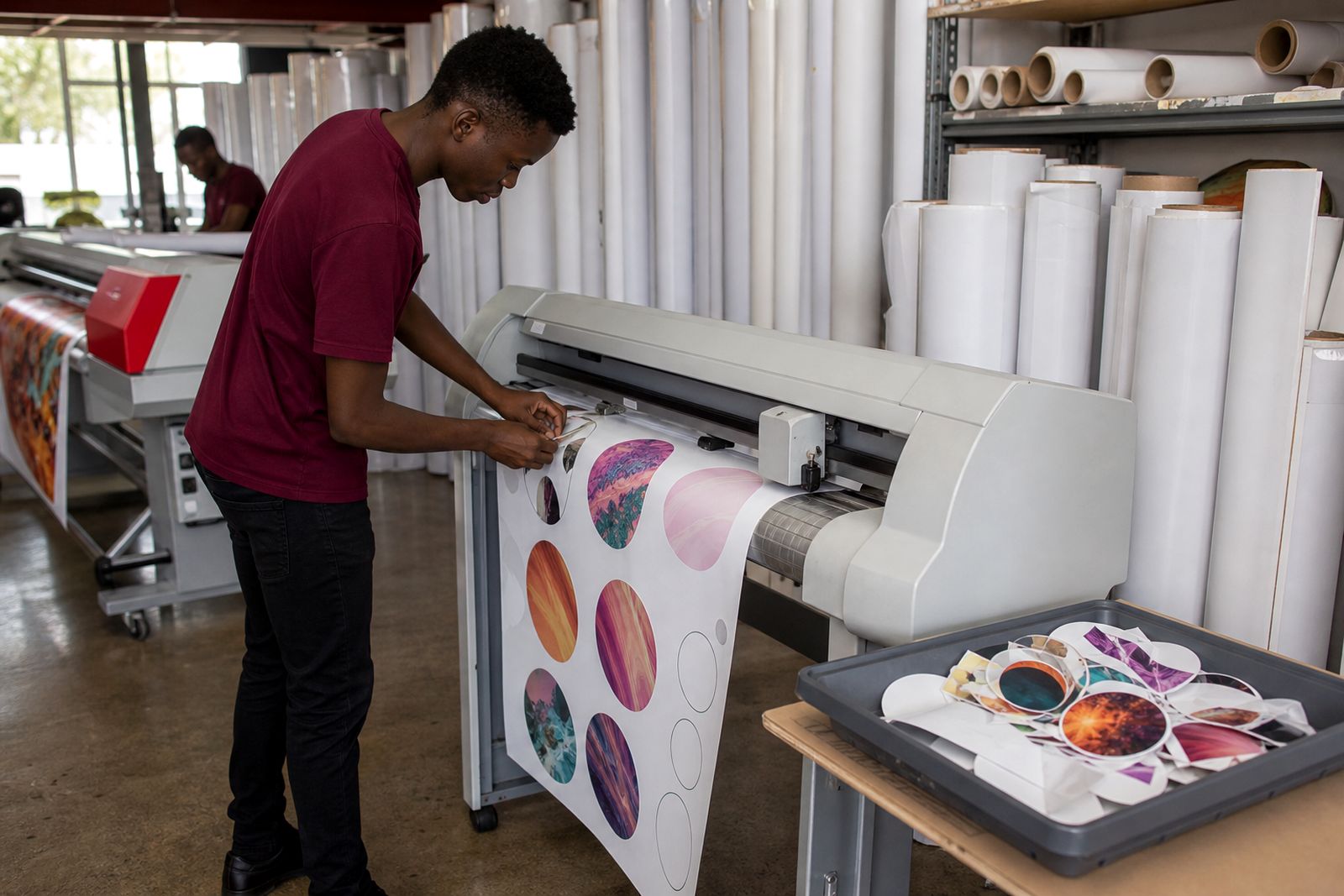
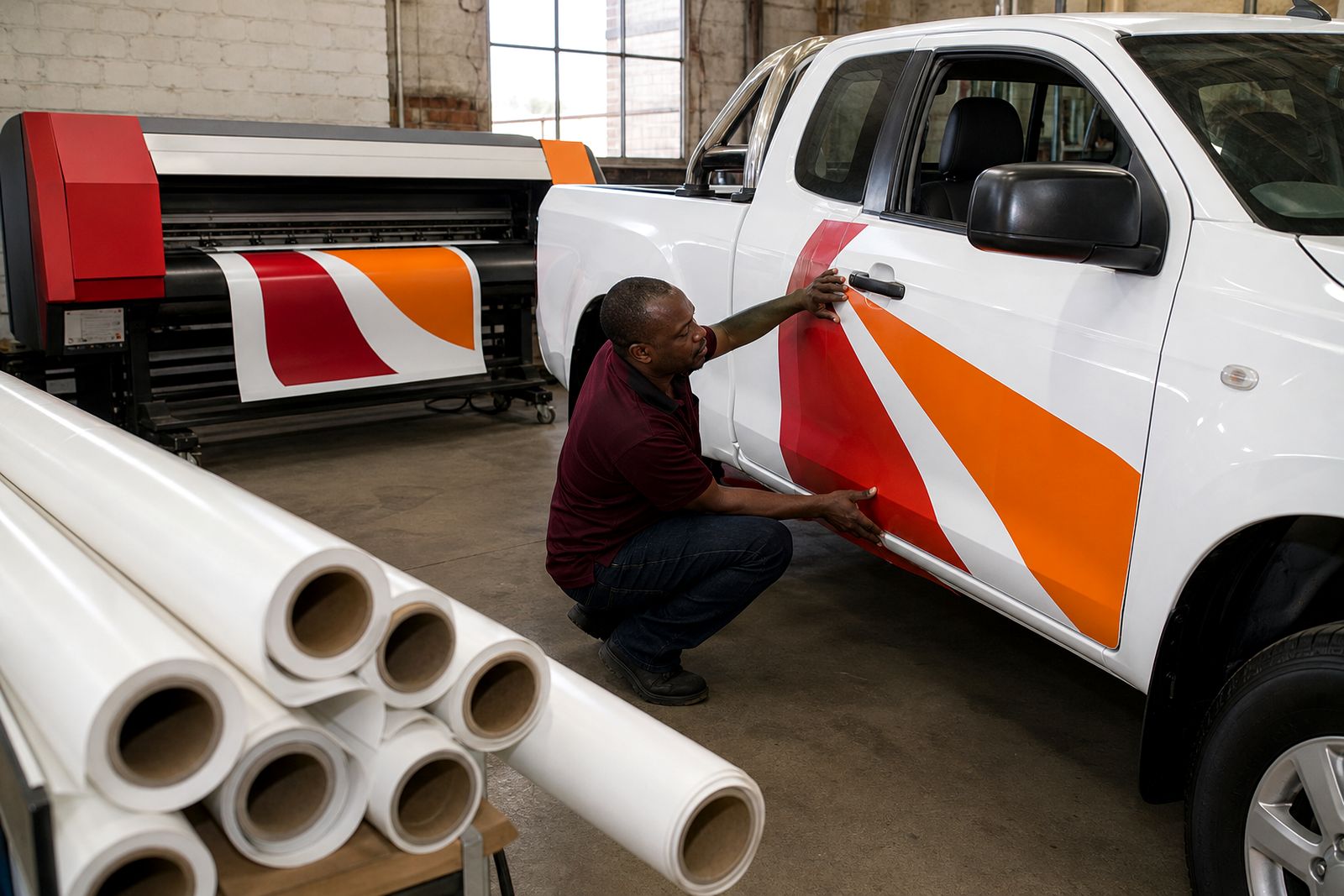
A print studio in Germiston needed material for an indoor retail refresh spread across a small chain of stores. The job included directional decals near entrances, counter-front promotions, and one branded wall panel behind each pay point. The printer used a wide-format machine with solvent-based ink, and the main concern was keeping the look consistent across different surfaces without overcomplicating the buying list.
The studio split the job into three material groups. Matt white printable vinyl was used for the wayfinding pieces because glare from overhead lights had already been a problem on older signs. A white printable film with matching cold overlaminate went onto the counter-front panels because those areas took a lot of knocks from baskets and cleaning cloths. For the branded wall panel behind the till point, a removable wall film made sense because the promotion would change later in the year. That mix kept installation practical and avoided using one expensive film for every piece when only a few panels needed the extra protection.
Roll width also played a part. Wider panels reduced visible joins on the wall piece, while narrower output worked fine for the directional decals and smaller promotional strips. It was not a glamorous decision, just a useful one, and that is often how indoor jobs stay profitable.
Roll planning before the print run starts
Indoor graphics can look simple on the finished wall, but the material plan should be settled before printing starts. Width, finish, laminate and final surface all affect waste. Common wide-format widths such as 1.07 m, 1.27 m, 1.37 m and 1.52 m give enough room to plan around panel joins, door widths and board sizes. A little layout thinking at this stage can save metres of vinyl later.
It also helps to separate the application questions from the machine questions. We supply printable self-adhesive vinyl rolls for eco-solvent, solvent, latex and UV printers, and the right choice depends on both the job and the print method. We do not print graphics, prepare artwork or sell printers, but we do help buyers narrow down the roll type for indoor signs, feature walls and point-of-sale work. If you need help comparing white, clear, removable or laminated options for an interior project, send the job details through our contact form.
What our Printable Vinyl customers say
Verified Google reviews
Questions we get asked
Is removable wall vinyl always the best option for indoor wall graphics?
Not always. It suits many painted wall applications, especially where the graphic will be changed later, but some walls need a different adhesive or a more stable film depending on paint, texture and panel size.
Do indoor signs need overlaminate?
Only where the face needs extra protection or easier cleaning. Reception signs, counter panels and shopper-facing graphics often benefit from cold overlaminate, while some wall murals and short-term panels can be used without it.
Can clear printable vinyl be used for indoor displays?
Yes. It works well on glass and acrylic where you want light to pass through or the background surface to remain visible, but clear film needs careful application because dust and bubbles show quickly.
Tell us about the job
Send sizes, materials and where you are through our contact form, and we will come back with the practical options.
Open the contact form