Overlaminates
Cold overlaminate film adds a protective top layer over printed self-adhesive vinyl, helping graphics last longer and look neater in use. This section covers the laminate finishes we supply and the job conditions that usually point you to gloss, matt or anti-scratch film.
What a cold overlaminate changes on a printed vinyl job
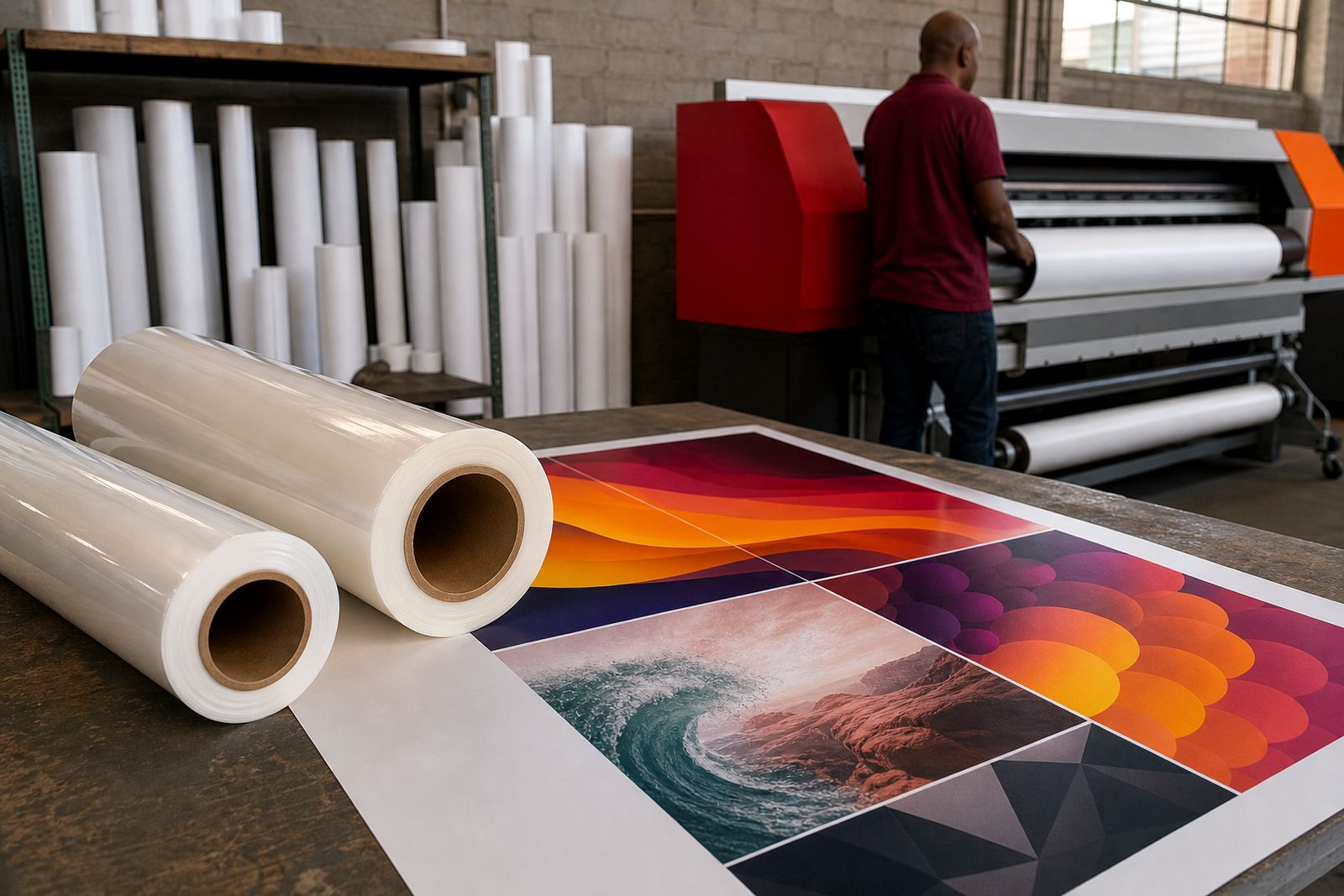
Printed vinyl can look excellent straight off the printer, but the surface is still exposed to rubbing, cleaning, finger marks and weather. A cold overlaminate film sits over the print and gives the face of the graphic extra protection, while also affecting the final look of the colour and sheen.
For sign shops, print studios and makers, lamination is often the difference between a short-term graphic and one that handles daily contact properly. On product decals, counter graphics, wall pieces and vehicle markings, the top film helps keep the print from scuffing too easily. It also helps during fitting because the face is a bit less delicate while being handled.
- Protects the printed face from scratching and light abrasion.
- Reduces the effect of moisture, dirt and routine wiping.
- Changes the finish to gloss, matt or a lower-glare protective surface.
- Adds body to some thinner prints, which can make application a bit easier.
Three finishes, three different outcomes
The right finish depends on where the graphic will sit and how people will see it. A bright retail window may need something different from a warehouse label panel or a short-run promotional decal. Colour, glare, touch and cleaning all matter.
- Gloss overlaminate: best where you want extra colour pop, a shiny face and stronger visual contrast. Often chosen for decals, promotional graphics and window work where the print needs to look lively.
- Matt overlaminate: useful where glare must be reduced under indoor lighting or sunlight. It gives a flatter appearance and can help on wall graphics, information panels and prints viewed at close range.
- Anti-scratch overlaminate: selected when the print will be handled often or cleaned regularly. Good for work that sees repeated contact, even when the graphic itself is not very large.
Gloss can deepen darker colours a bit, while matt softens reflections and gives a quieter finish. Anti-scratch options are usually chosen for surface durability first, not just appearance, so they suit practical site conditions where hands, cloths and daily movement are part of the job.
Pairing laminate with indoor and outdoor vinyl
Overlaminate should not be chosen in isolation. The printed vinyl underneath, the adhesive type and the expected life of the graphic all need to line up. A removable wall vinyl for an indoor campaign does not need the same pairing as a polymeric outdoor print on a vehicle panel.
For indoor graphics, gloss or matt film is often enough, depending on reflections and the look the client wants. For outdoor work, the printed vinyl grade and laminate should be matched more carefully, especially on jobs exposed to sun, rain and washing. In coastal areas, salt in the air and regular wiping can be harder on exposed prints than many people expect.
- Short-term indoor graphics: usually paired for appearance first.
- Wall and décor prints: often better in matt to cut glare.
- Outdoor decals and signs: laminate choice should support the vinyl grade underneath.
- Higher-contact graphics: anti-scratch film is usually worth considering.
If you are still deciding between monomeric and polymeric media, the guides and vinyl sections on this site help place the laminate choice in context rather than treating it as a seperate afterthought.
Practical checks before you pick a roll
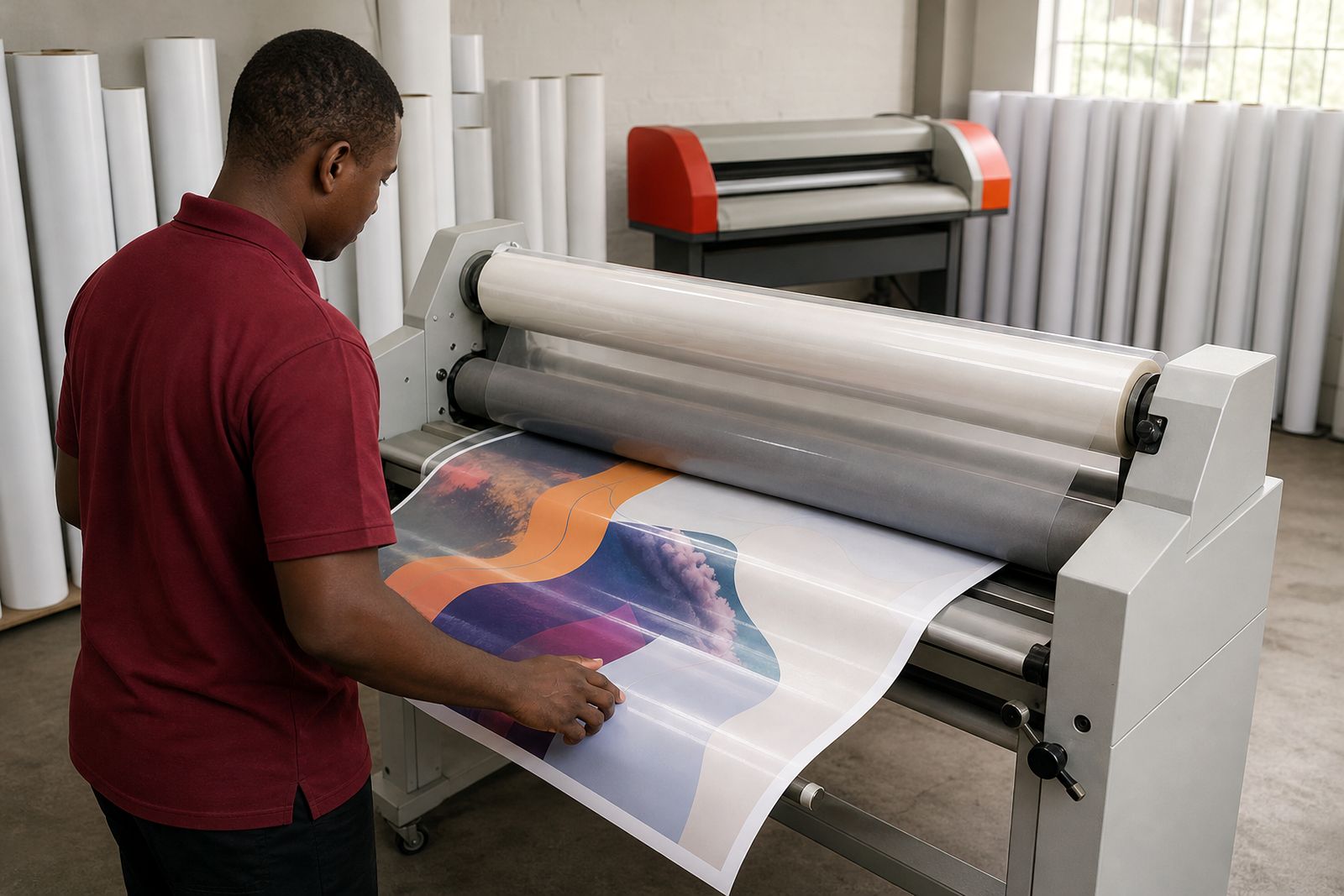
A few workshop checks usually narrow the choice quickly. Start with the printer and ink set, then move to finish, handling and application surface. We supply wide-format printable vinyl and matching cold overlaminates for common print setups, but we do not print graphics for clients or sell printers, so the selection process is about material fit rather than machine sales.
- Confirm the print is fully ready for lamination for your ink type and workflow.
- Check the roll width needed, such as common sizes around 1.07 m, 1.27 m, 1.37 m or 1.52 m.
- Decide whether glare reduction or colour punch matters more.
- Consider if the finished graphic will be touched, cleaned or rubbed often.
- Match the laminate to the intended indoor or outdoor use, not just the print face.
If you need help narrowing it down, send the print method, vinyl type, intended use and preferred finish through our contact form. That gives our team enough to point you to a sensible option without guesswork.
Where gloss, matt and anti-scratch are commonly used
Most laminate choices make more sense when tied to an actual use case. A maker producing short-run stickers may value surface appearance first, while a sign shop doing wayfinding panels may care more about glare and day-to-day cleaning. In practice, finish choice is rarely only about looks.
Gloss laminates are common on promotional decals, product branding panels and window graphics where colour impact matters. Matt films suit indoor signs, wall messages and display pieces under direct lights where reflections can spoil readability. Anti-scratch laminates are often used on labels, touchpoint graphics and pieces that are packed, moved or wiped frequently. That mix covers a lot of real work moving through studios from Germiston to the rest of the country.
How this section fits with the rest of the range
This part of the range focuses on the protective top film used after printing. If you still need the base print media, see the pages for gloss and matt white vinyl, clear printable vinyl, removable and wall vinyl, and outdoor monomeric or polymeric vinyl. If you want a closer look at one laminate type, the cold overlaminate page takes the topic further.
Sticker Papers Pro supplies these materials from Germiston and couriers rolls to print studios, sign shops, artists and hobbyists across South Africa. The aim is practical material guidance for real print work, whether the job is a run of decals, an indoor wall panel or outdoor signage that needs a bit more protection than bare print film can give.
What our Printable Vinyl customers say
Verified Google reviews
Questions we get asked
Do all printed vinyl graphics need overlaminate?
No. Some short-term indoor graphics can be used without it, but many printed jobs benefit from the extra surface protection and the cleaner finished look. The more handling, cleaning or outdoor exposure involved, the more useful laminate becomes.
Is gloss always better for colour?
Gloss often gives a brighter, punchier look, especially on darker colours and promotional graphics. Matt is better where glare is a problem or where you want a flatter visual finish that reads well under lights.
Can I use one laminate type for every job?
It is possible, but not usually the best approach. A single finish may simplify stockholding, yet indoor décor, outdoor signs and high-contact decals often perform better when the laminate is matched to the print media and the site conditions.
Tell us about the job
Send sizes, materials and where you are through our contact form, and we will come back with the practical options.
Open the contact form