

Printing and drying solvent vinyl
Solvent, eco-solvent and similar ink sets need proper drying and outgassing before a job is cut, packed or laminated. This guide covers the shop-floor checks that help wide-format printable vinyl stay flat, clean and ready for finishing.
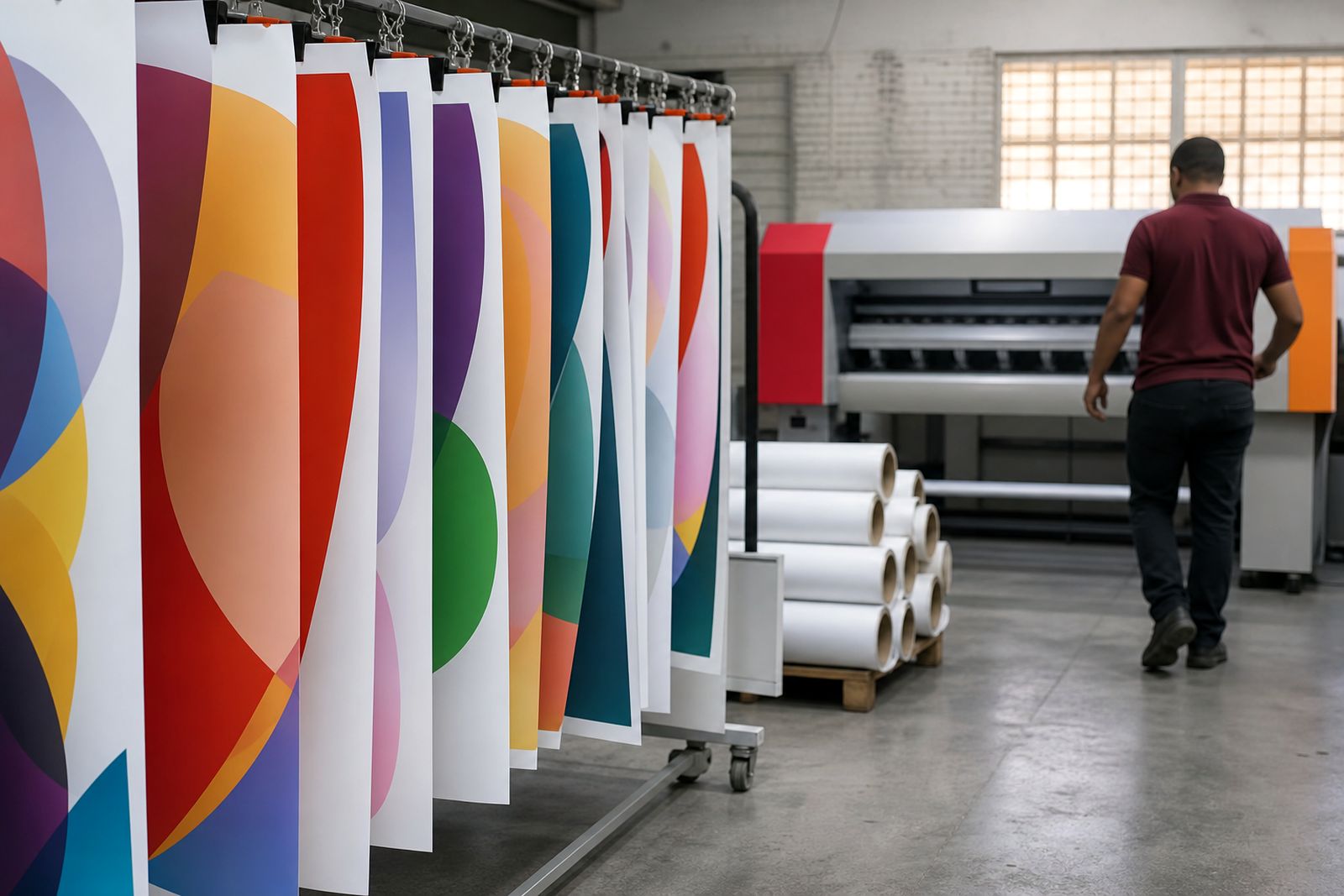
Dry to the touch is not the finish line
A print can feel dry on the surface while solvents are still leaving the ink film. That matters because trapped solvent can soften adhesive, cause silvering under laminate, or leave an edge curl that only shows later on the wall, window or panel. In a busy print room it is easy to read a cool sheet as finished when it really just stopped looking wet.
Outgassing is simply the ink releasing what remains after printing. The heavier the ink laydown, the darker the solid area and the less air movement around the roll or sheet, the longer that stage can take. Wall coverage, dense colour blocks and high-pass profiles often need more patience than a lighter decal run. If the print is going straight under cold overlaminate, this step becomes even more important.
- Surface dry means the face no longer feels tacky.
- Stable dry means the print has released enough solvent for finishing.
- Lamination should wait for stable dry, not just surface dry.
What changes drying time in a real print room
Drying is not set by one clock for every roll. Media grade, coating, heater settings, ink load and room conditions all affect the result. A removable wall film printed in deep colours may need a different hold time from a gloss white monomeric roll carrying a lighter poster graphic. Coastal humidity can slow things down, while a warm inland shop may move a print along faster if air can circulate properly.
Roll width also plays a part. A wide print wound up tightly after the take-up stage holds more warmth and vapour in the roll than a looser panel laid open on a clean bench. If your machine has pre-heat, platen and post-heat controls, use a sensible profile for the media rather than forcing more heat to push speed. Too much heat can distort softer films, shift liners or affect dot shape.
- Heavy solids and rich blacks normally need longer to settle.
- Cool rooms and humid days can extend drying.
- Tightly wound prints hold vapour longer than open sheets.
- More heat is not always better, especially on thinner films.
A safe print routine before lamination
Run a known profile that matches the vinyl and ink type, then check the first metres before you commit the whole job. Look for mottling, pooling, soft detail and any sign that the heater balance is off. Once printed, keep the media in a clean area away from dust and overspray. If panels must stay on the core, do not cinch them hard. A looser wind gives the print a better chance to release vapour instead of trapping it layer on layer.
For flat pieces, many shops get better consistency by unrolling and laying sections open, liner side down, with enough space for air movement. Avoid stacking fresh prints face to face. If the job is destined for vehicle graphics, window graphics or long outdoor exposure, do not rush the next step. Laminate applied too early can lock problems in, then the issue only appears after installation which is a headache for everyone.
- Print a small test strip when changing vinyl type.
- Check heater settings against the media profile.
- Keep fresh prints clean, open and lightly handled.
- Leave room for air movement before cutting or laminating.
Quick checks to judge whether the print is ready
You do not need a complicated lab process to spot a print that still needs time. Start with smell. A strong solvent smell close to the surface usually means the job has more outgassing to do. Then flex a trimmed offcut gently. If the ink film feels soft or marks too easily, hold the job a bit longer. Another clue shows up at lamination: if tiny silver patches appear where the film should sit clear, the print may not have stabilised or the application pressure may be too low.
Look at the print edges too. Edge lift on freshly cut decals can point to trapped solvent, especially on dense colour builds. If you weed a label and the face film seems too soft, do not force the run through finishing. A short wait in the right conditions usually costs less than remaking a full batch. It sounds obvious but many waste sheets start there.
Lamination, cutting and packing after drying
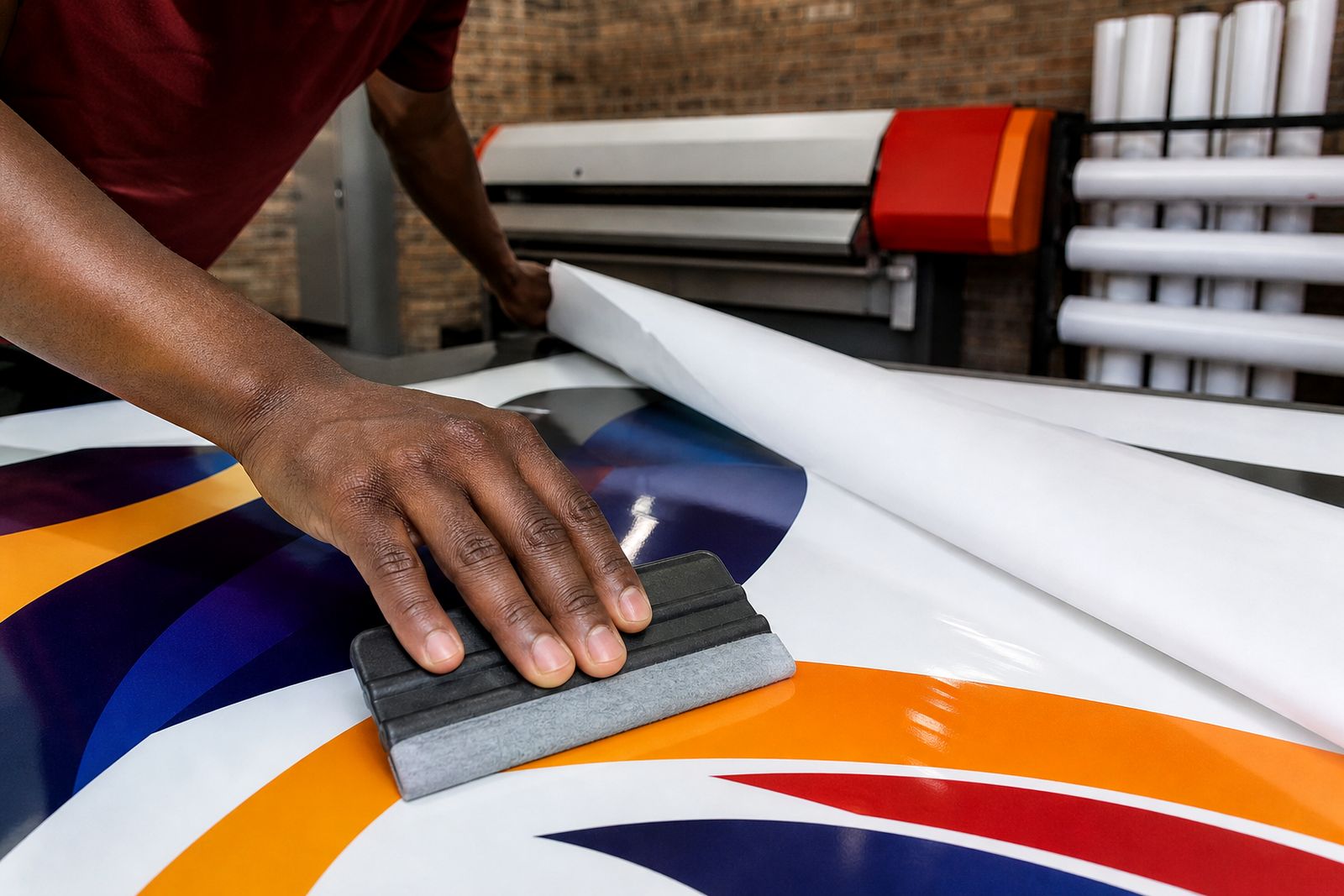
Once the print has settled, cold overlaminate can go on with fewer surprises. Feed tension should be even and pressure should be firm enough to wet out the adhesive without stretching the print. For clear printable vinyl and gloss white films, any trapped air or haze shows readily, so keep rollers clean and nip settings consistent. If the graphic will be contour cut, test registration after lamination because some films move slightly as they relax.
Packing also deserves care. Do not wrap a fresh laminated job while it is still warm from rollers or the print room. Let it rest flat first, then roll with suitable support for transport. If panels are headed from Germiston to another province by courier, a neat, even roll helps prevent tunnelling and edge knocks on arrival. That small bit of patience saves rework later.
Choosing the right vinyl when drying matters most
If a job needs to move through production with fewer variables, the media choice matters. Outdoor grades, removable films, clear vinyl and wall products do not all react the same way to ink load and post-print handling. The right face film and adhesive pairing can make drying, lamination and application less troublesome. For example, a wall graphic in a textured indoor area may call for a different printable vinyl from a short-term promotional window decal.
Sticker Papers Pro supplies printable self-adhesive vinyl rolls for eco-solvent, solvent, latex and UV printers, along with matching cold overlaminates in common wide-format widths. We can point you to gloss or matt white vinyl, clear vinyl, removable options and outdoor monomeric or polymeric grades based on the job brief. If you need help matching the roll to the print method and finishing stage, send the details through our contact form and include your printer type, ink set, media width and whether the work will be laminated.
What our Printable Vinyl customers say
Verified Google reviews
Questions we get asked
Can I laminate solvent-printed vinyl straight after printing?
It is better to wait until the print has dried beyond the surface and released enough solvent. Laminating too early can trap vapour and lead to silvering, edge curl or a softer print film.
Does every printable vinyl dry at the same rate?
No. White gloss, matt, clear, removable wall films and outdoor grades can all behave differently depending on coating, ink load, heat settings and room conditions.
What details should I send when asking which roll to use?
Include the printer type, ink type, vinyl width you want, whether the job is indoor or outdoor, and if it will be laminated or contour cut. That gives our team enough context to point you to a suitable roll.
Tell us about the job
Send sizes, materials and where you are through our contact form, and we will come back with the practical options.
Open the contact form