
Gloss and matt white printable vinyl
Gloss and matt white printable vinyl is the everyday white self-adhesive roll used for decals, labels and sign panels. We supply wide-format rolls for eco-solvent, solvent, latex and UV printers, with guidance on the finish and grade that best fits the job.
The white vinyl most print rooms use every week
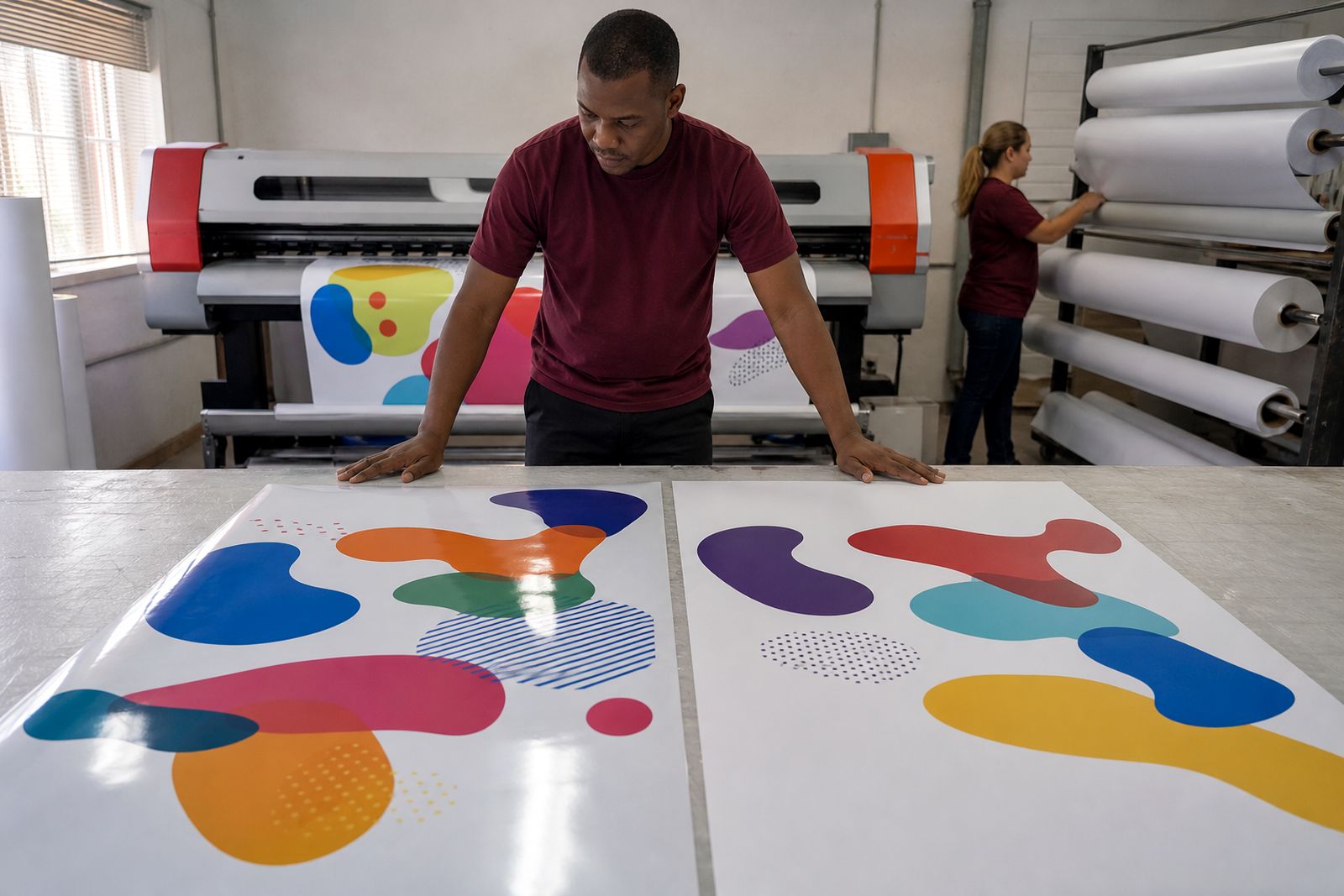
White printable self-adhesive vinyl is the standard starting point for a wide range of graphics. It gives you an opaque white face film for strong colour, clean text and dependable cut lines, whether the job is a short-run product sticker sheet or a wider panel for indoor signage. On this page we are talking about printable white rolls only, not pre-printed graphics and not printer sales.
Gloss and matt versions use the same basic idea but behave differently once installed. Gloss gives higher surface shine and stronger colour pop, which suits decals, promotional labels and smooth sign faces. Matt cuts glare under bright lights and reads better on wall panels, information boards and spaces where reflections get in the way. Both are available in common wide-format widths used by South African print studios and makers.
- White face film for full-colour print
- Self-adhesive backing for flat clean surfaces
- Gloss for brighter finish and sharper shine
- Matt for lower glare and a softer look
- Suitable for eco-solvent, solvent, latex and UV printing
Roll widths, grades and the limits that matter
The right roll is not only about width. The grade affects how the vinyl sits on the surface, how long it needs to last outdoors and how well it copes with slight curves. For ordinary flat applications, a monomeric white vinyl is often the practical choice. Where the panel will stay up longer, face stronger weather or need better dimensional stability, a polymeric option usually makes more sense.
Common widths such as 1.07 m, 1.27 m, 1.37 m and 1.52 m cover most print-and-cut and wider print runs. Wider rolls reduce joins on larger boards and window runs, but they also need enough handling space and a take-up path that stays clean. A narrow job printed on a very wide roll can work, though waste can be higher if the nesting is poor.
- Monomeric grades for general flat indoor and outdoor work
- Polymeric grades for longer outdoor use and better stability
- Gloss or matt white face depending on finish required
- Permanent adhesive for most decals, labels and sign panels
- Best on flat or only slight curves, not deep channels or rivets
White printable vinyl is not the right choice for every install. It is not cast wrap film, and it is not meant for compound curves, heavily textured walls or surfaces that are shedding paint. If the site has rough plaster, chalky masonry or damp boards, the film may lift early even if the print itself looks good.
Jobs it suits well and jobs better handled differently
This material earns its place on everyday production because it covers a broad middle ground. It works well for retail decals, product labels, menu boards, temporary campaign signs, safety markers, shelf strips and smooth indoor wall panels. In workshops around the coast, the same print can face more humidity than inland jobs, so drying and lamination choices matter a bit more than they do on a dry Highveld day.
There are also clear cases where another material is better. Clear vinyl is usually the neater answer for see-through decals on glass. Removable wall vinyl is better for short-term interior graphics where low peel damage matters. For flooring, white printable vinyl on its own is not enough; that needs a floor-rated system and the right surface prep.
- Good for flat signs, decals and branded panels
- Good for labels where white backing is needed for colour strength
- Useful for indoor displays and sheltered outdoor boards
- Less suitable for deep corrugations, rivets and uneven plaster
- Not the first pick for transparent graphics on glass
Printing, drying and lamination on a working floor
Printable white vinyl gives the best result when the printer profile, ink load and drying routine are matched to the film. Solvent and eco-solvent prints usually need proper outgassing before lamination, while latex and UV jobs can move through production differently. If the ink is still too fresh under the surface, silvering, tunnel edges or adhesive issues can show up later.
Cold overlaminate is often worth using on gloss and matt white prints that will be handled often, cleaned regularly or exposed outdoors. Lamination protects the print face from scuffing and makes day-to-day wipe downs easier. A gloss laminate keeps colour depth high, while a matt laminate helps cut reflections on reading panels and interior signs. A small test is worth doing when a fine text job or dense colour block is involved, the differnce can be noticeable.
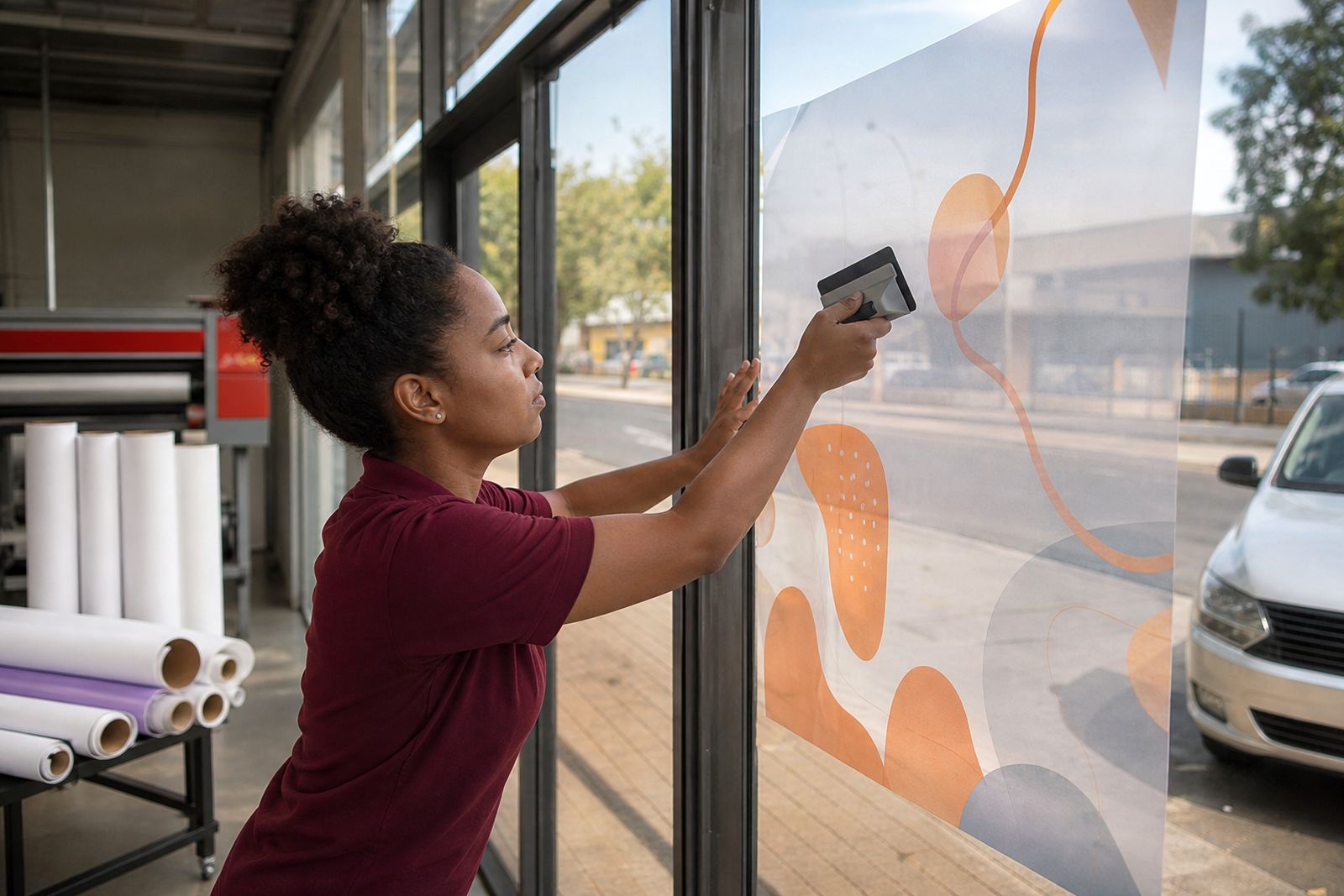
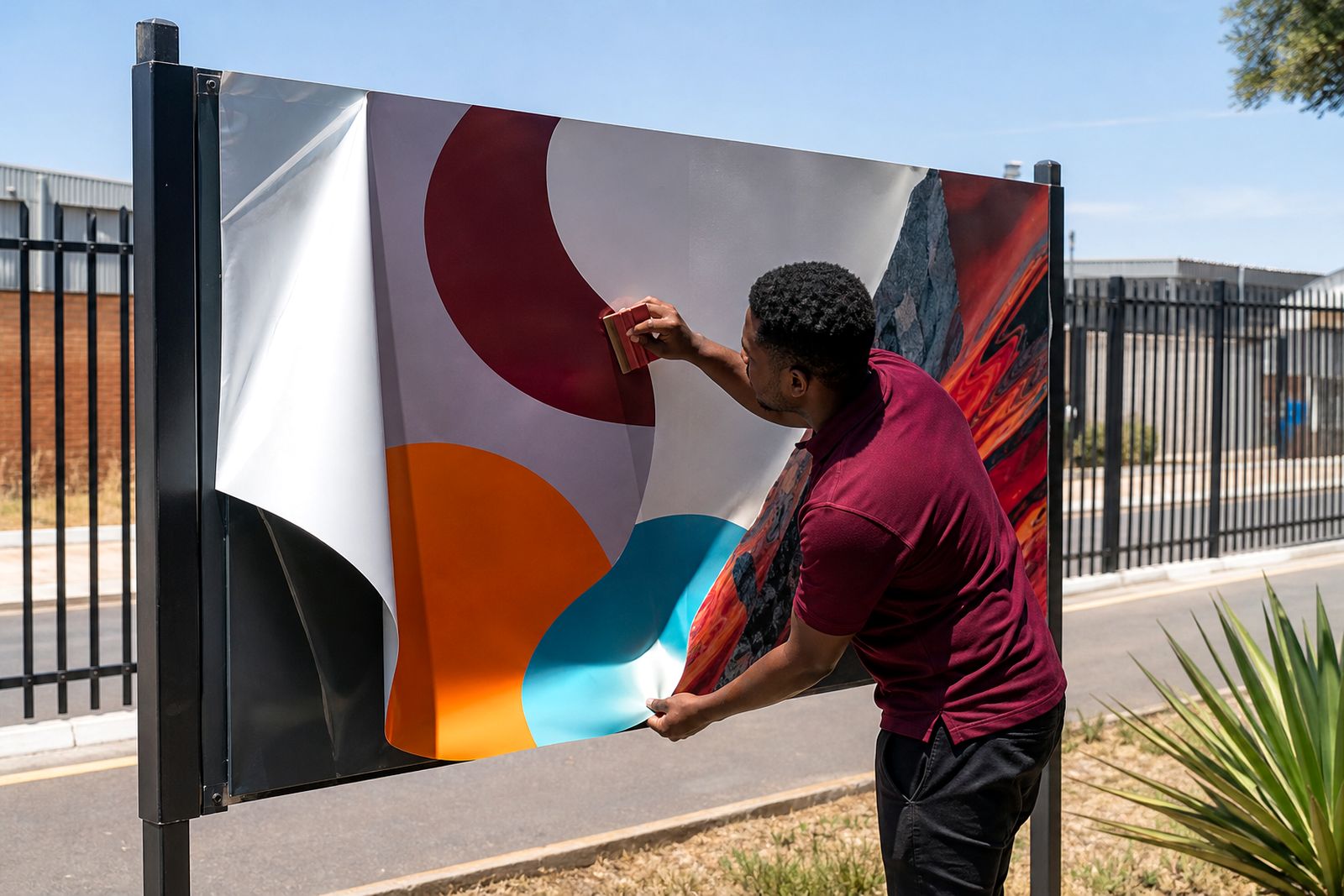
For installation, the surface should be dry, smooth and free from wax, dust and silicone residue. Painted boards need stable cured paint, and glass or metal should be cleaned so no oily film remains. Application temperature matters as well. A cold panel can make the adhesive feel stiff and less forgiving during laydown.
Care on the wall, board or window
Once applied properly, gloss and matt white printable vinyl is straightforward to look after. Regular dry dusting or a soft damp cloth is usually enough for indoor graphics. On shop windows or counters, use mild cleaning methods rather than aggressive solvents. Hard scrubbing on edges can shorten the life of the film, especially where corners carry frequent hand contact.
Outdoor life depends on the grade, the exposure and whether the print is laminated. Full sun, coastal salt air and driving rain all change the picture. In Gauteng, heat and UV can still be tough on unlaminated prints even without the coast in the mix. Where the panel faces weather every day, a polymeric grade with matching cold overlaminate is generally the safer route.
- Clean with mild methods and a soft cloth
- Avoid strong solvent cleaners on the printed face
- Protect exposed outdoor prints with cold overlaminate
- Check edges on high-touch applications
- Store unused rolls upright or supported, away from heat and dust
Details that help us point you to the right roll
When you send an enquiry through our contact form, a few practical details make the recommendation more accurate. Tell us which printer and ink type you use, whether the finish must be gloss or matt, and the width that fits your machine and artwork layout. It also helps to know if the job is for indoor display, short-term outdoor use or a longer outdoor panel.
Please mention the surface the vinyl will be applied to, such as ACM, glass, painted board, steel or a smooth interior wall. If lamination is required, say whether the print needs extra scuff resistance, lower glare or weather protection. We can then point you to a suitable white vinyl and matching cold overlaminate rather than a roll that only looks right on paper.
- Printer type and ink set
- Preferred finish, gloss or matt
- Roll width needed
- Indoor or outdoor use
- Flat panel, window, label or wall application
- Whether matching cold overlaminate is needed
What our Printable Vinyl customers say
Verified Google reviews
Questions we get asked
Is gloss or matt better for labels and decals?
Gloss is often chosen where brighter colour and a shinier face are wanted. Matt is usually better where overhead lights create glare or where a softer finish suits the panel.
Can this white vinyl be used outdoors?
Yes, but the grade matters. General outdoor boards can use printable white vinyl, while longer exposure and tougher conditions usually call for a polymeric option and cold overlaminate.
Will it work on textured walls or deep vehicle curves?
Not usually. White printable vinyl suits flat clean surfaces and only slight curves. For textured walls, deep channels or rivets, another film type is the better choice.
Also worth a look
Tell us about the job
Send sizes, materials and where you are through our contact form, and we will come back with the practical options.
Open the contact form