Clear printable vinyl
Clear printable vinyl is a transparent self-adhesive film used where you want the printed image to sit on glass or other smooth surfaces without a solid white background. It suits window graphics, clear decals and label work where clean edges and light transmission matter.
Where clear printable vinyl fits best
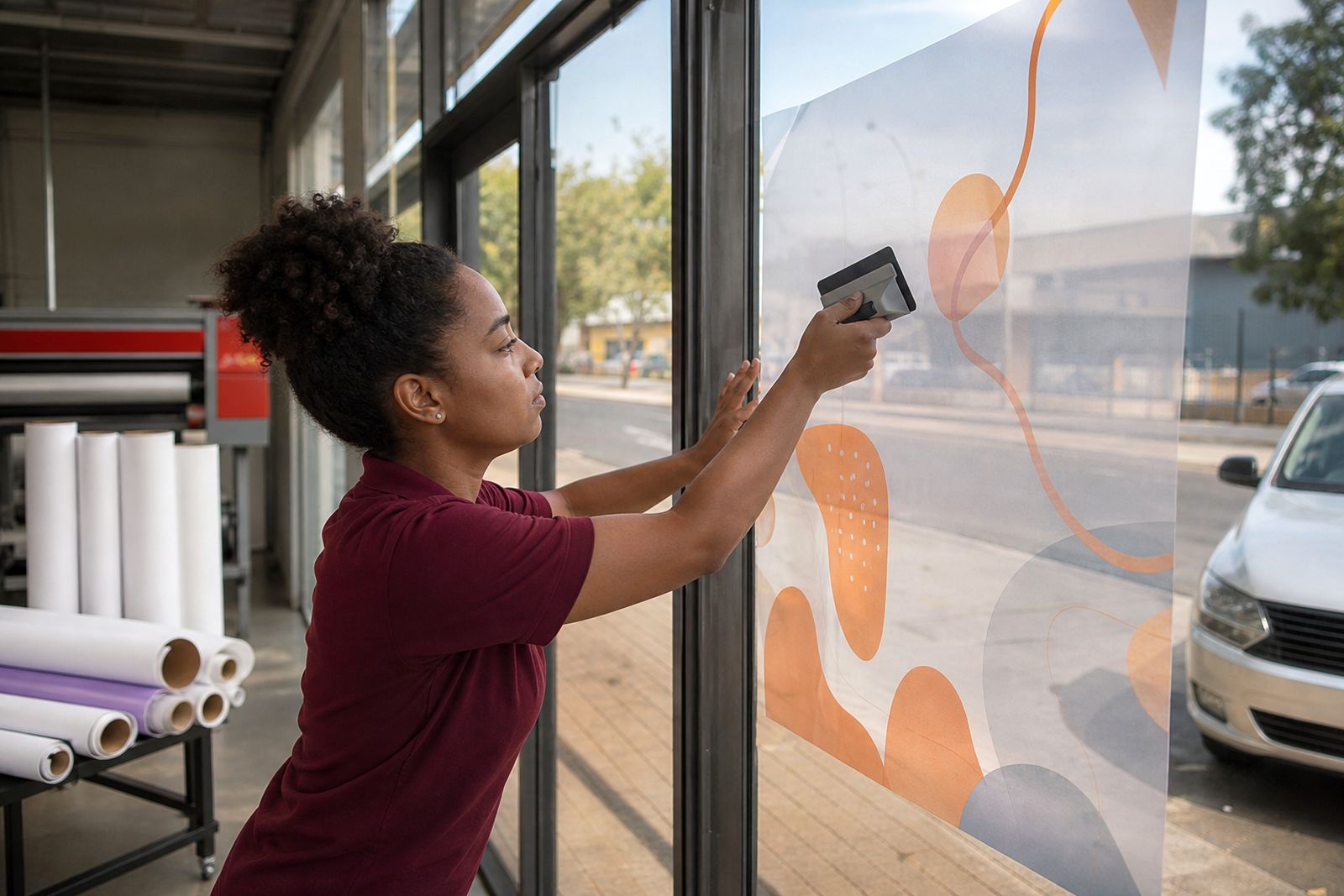
Clear printable vinyl is chosen when the surface underneath needs to remain visible. On shop windows, interior glass partitions and clear product labels, the film lets unprinted areas stay transparent while carrying the printed image where you need it. It is commonly used by sign shops and print studios producing promotional window graphics, opening-hours decals, branding panels and short to medium term glass messaging.
Because the film is transparent, colour behaves differently from print on white vinyl. Light passes through the film and the background affects the final look. On dark glass, strong colours can hold well, but pale tints and fine details may look softer than expected. For labels on clear bottles, jars or acrylic panels, artwork usually needs enough contrast to stay readable once applied.
- Good for window graphics on clean flat glass
- Useful for clear labels where a white face film would look too heavy
- Suitable for indoor promotional decals and selected outdoor applications
- Best results on smooth surfaces rather than textured panels
Film options, widths and practical limits
We supply clear printable vinyl rolls for wide-format eco-solvent, solvent, latex and UV print systems. Common roll widths include 1.07 m, 1.27 m, 1.37 m and 1.52 m, which cover most sign and display work from small decal runs to larger window panels. The right width depends on your printer, the panel size and whether you want to avoid joins across a glass frontage.
Clear film works well when the application surface is flat, smooth and properly prepared. It is less forgiving on rough powder-coated surfaces, textured walls or old painted substrates. For large window spans, careful handling matters because clear films show creases, trapped dust and silvering more easily than white films. If the job will face direct weather, washing and regular sun, match the print film to a suitable cold overlaminate if extra surface protection is needed.
- Transparent face film with pressure-sensitive adhesive
- Available for standard wide-format print and cut workflows
- Works best on glass, acrylic and other smooth clean panels
- Large panels need accurate alignment because edges and overlaps remain visible
Printing notes that affect the final look
Clear printable vinyl does not hide what sits behind it, so artwork setup needs a bit more planning. If the print will go onto clear shopfront glass, mirrored glazing or tinted windows, the colour density should be checked with the final background in mind. Fine grey text, soft pastels and light skin tones can lose strength once installed. Stronger solids and deliberate negative space usually read better.
For print and cut decals, allow proper ink drying before contour cutting, laminating or packing the finished graphics. Solvent and eco-solvent jobs in particular benefit from enough outgassing time before overlamination. UV and latex output can behave differently depending on ink load and heater settings, so it helps to tell us what print system you are running. A short note on the job can prevent a roll choice that feels right on paper but not on press.
- Background colour influences the printed result
- Light colours often appear softer on transparent film
- Drying and outgassing matter before lamination or application
- Ink compatibility should match your print process, not just the machine width
Jobs it suits, and jobs better handled with another vinyl
Clear printable vinyl is a strong fit for glass branding, retail promotions, office partition graphics, locker decals, display panels and transparent product labels. It also works for short-run sticker sheets where the design relies on a see-through edge. In studios and maker spaces, it is often used for packaging details, glass candle labels, acrylic sign faces and custom decorative decals.
There are cases where another material is the better call. If you need solid colour pop on a dark surface, white printable vinyl usually gives a cleaner result. If the wall has low-sheen paint or light texture, removable and wall vinyl is normally easier to install and remove. For outdoor signs exposed to stronger weathering, an outdoor monomeric or polymeric white film may be the safer route, particularly where opacity and long-view readability matter more than transparency.
- Choose clear film when transparency is part of the design
- Choose white film when you need stronger opacity and colour hold
- Choose wall vinyl for painted interior surfaces
- Choose outdoor grades for harder exterior exposure
Application, site conditions and aftercare
Glass and acrylic need to be properly cleaned before installation. Dust, silicone residue, old adhesive and oily hand marks can show through the film and affect bond strength. Clear graphics also reveal trapped air more easily, so application method matters. Flat dry application is common for many jobs, though experienced installers may adapt technique according to panel size, temperature and the film in use.
For shopfront work in coastal areas, regular cleaning and salt-laden air can shorten the tidy appearance of any printed film if the edges are left exposed to constant washing. Interior partition graphics generally stay presentable for longer. After installation, clean with a soft cloth and mild detergent. Avoid aggressive solvents, scouring pads and blades on the printed face. If the graphic has been overlaminated, it will handle routine wiping better, but sharp impact and repeated scraping can still mark it.
- Install onto smooth, dry and fully cleaned surfaces
- Avoid dusty fitting conditions and freshly painted substrates
- Use gentle cleaning products after application
- Consider cold overlaminate where extra surface protection is needed
What to send when asking about a clear roll
When you enquire, the most useful details are the printer type, ink set, roll width needed and where the finished graphic will be applied. It also helps to know if the film is for a window viewed from outside, a clear label on packaging, or a cut decal for indoor glass. Those details affect film choice, adhesive preference and whether an overlaminate should be included.
If the job has any awkward points, mention them up front. That could be tinted glazing, a cold installation area, frequent wipe-downs, small contour-cut lettering or a requirement for very clear non-printed areas. A brief note on quantity and destination helps as well, whether the rolls are heading to a sign shop in Gauteng, a print studio in the Cape, or a maker in a smaller town. You can send those details through our contact form and we will point you to a suitable option.
- Printer model and ink type
- Required roll width
- Indoor or outdoor use
- Glass, acrylic or another smooth substrate
- Whether you need matching cold overlaminate
- Courier destination in South Africa
What our Printable Vinyl customers say
Verified Google reviews
Questions we get asked
Can clear printable vinyl be used for shop windows?
Yes. It is commonly used on shopfront glass for promotions, trading-hour decals and branding panels. The glass should be smooth, clean and dry, and the artwork should allow for the transparency of the film.
Will colours look the same as they do on white vinyl?
Not usually. Because the film is transparent, the background affects the printed image. Dark glass or tinted surfaces can mute lighter colours, so artwork often needs stronger contrast.
Do I need laminate over clear printable vinyl?
Not for every job. Indoor decals and short-term glass graphics may be fine without it, but laminate helps where the print face will be handled, cleaned often or exposed to tougher outdoor conditions.
Also worth a look
Tell us about the job
Send sizes, materials and where you are through our contact form, and we will come back with the practical options.
Open the contact form