Printer and ink compatibility
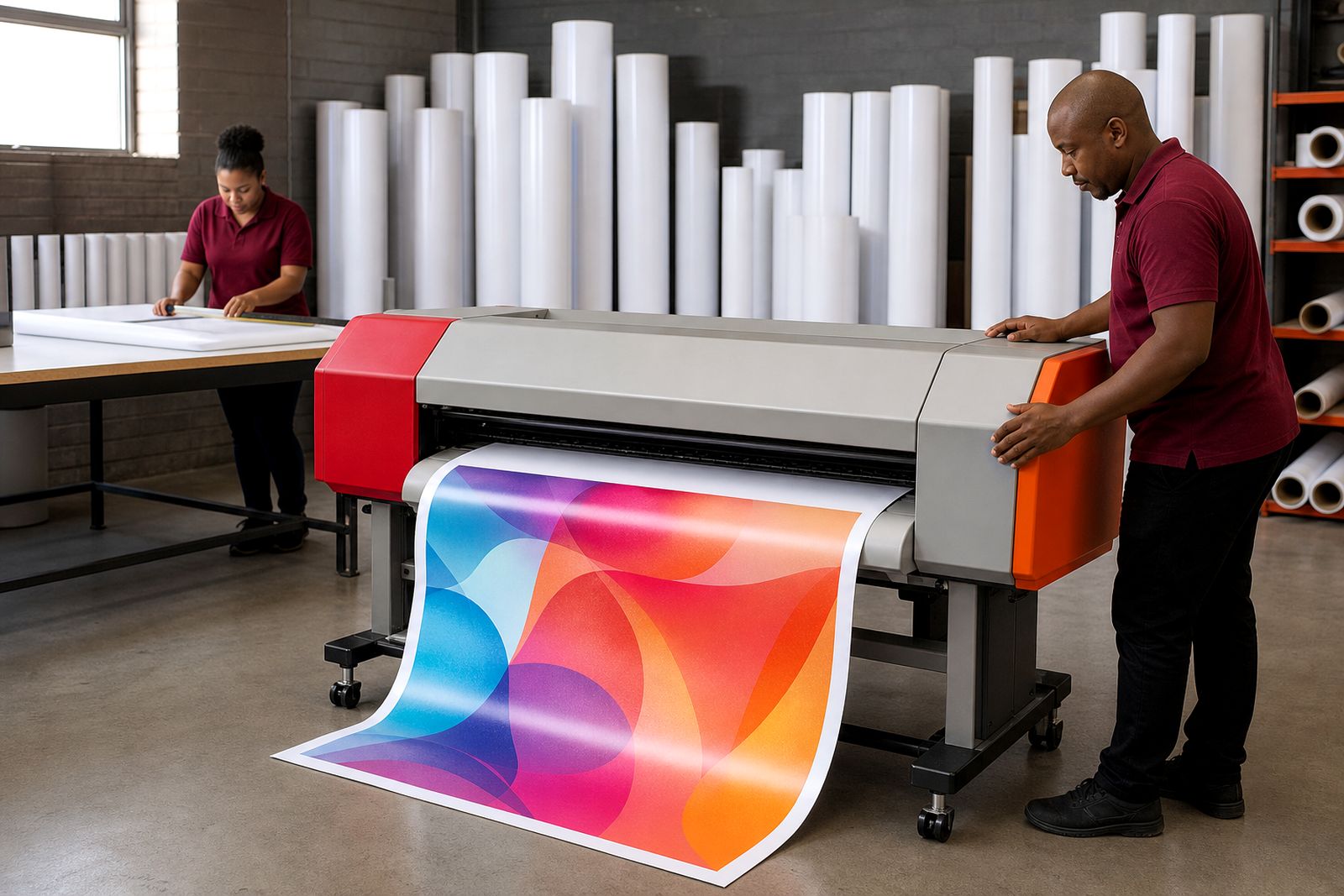
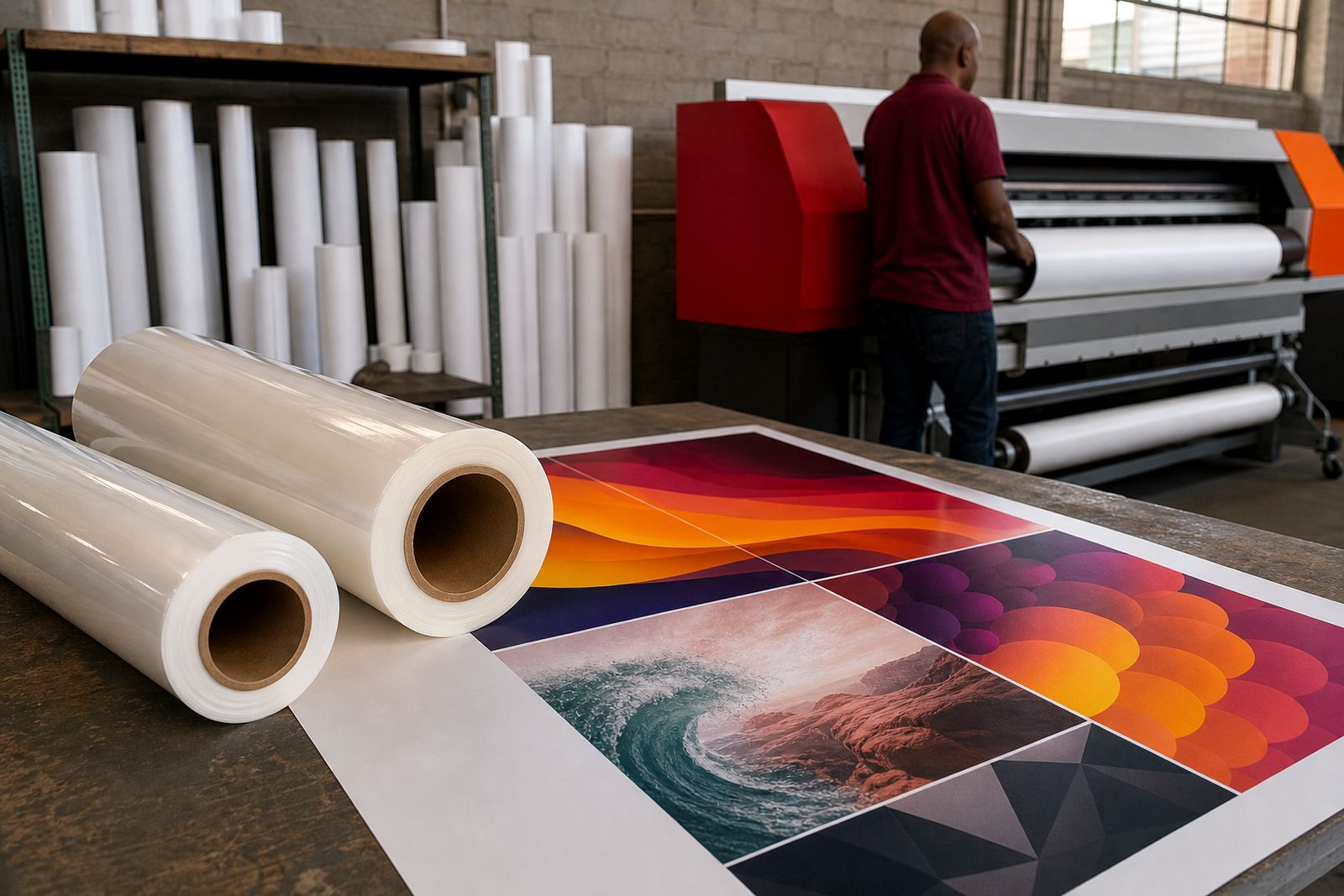
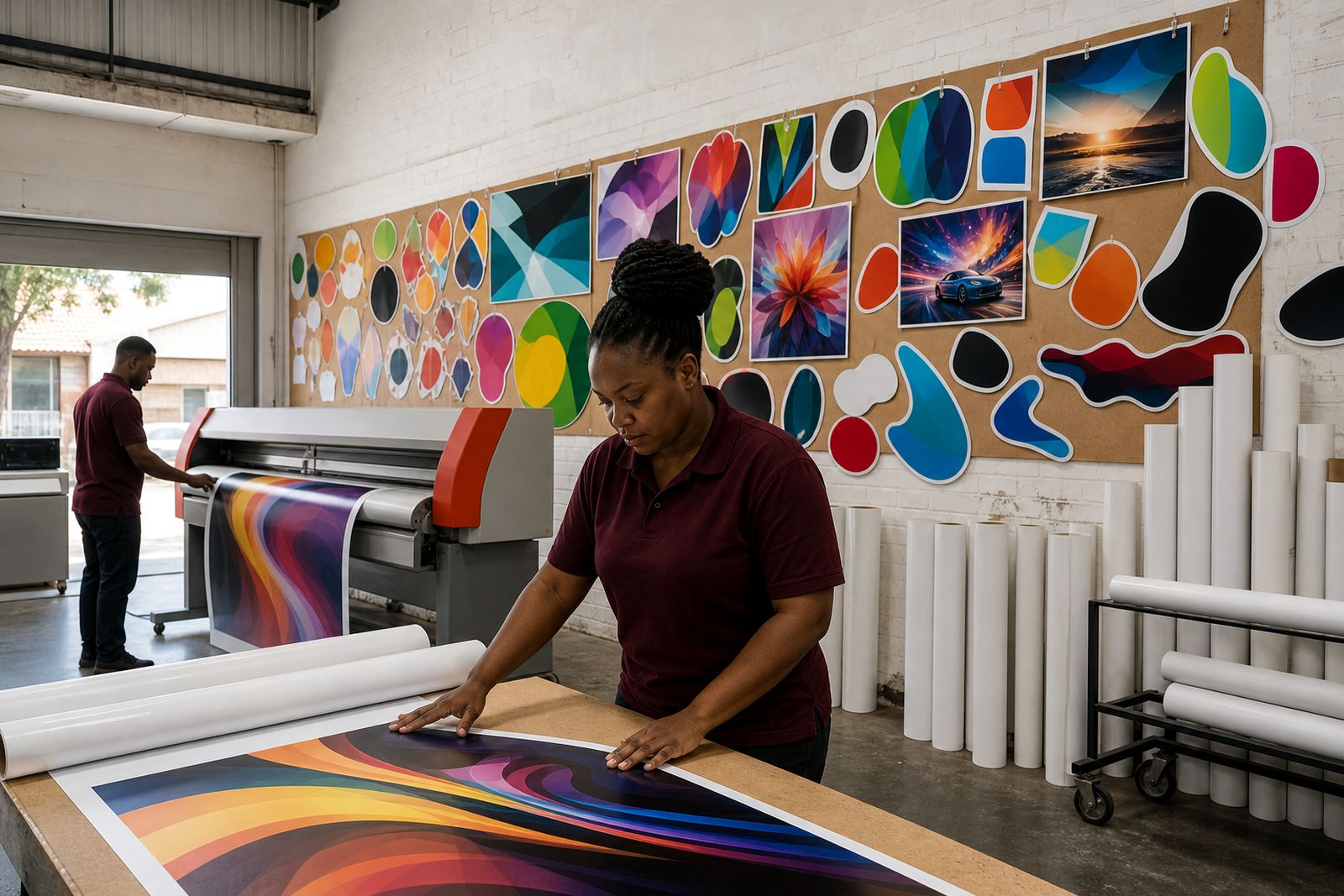
Printable vinyl works best when the face film, adhesive and liner suit the ink set and the way your printer lays it down. We help you match rolls for eco-solvent, solvent, latex and UV output so the print looks right, dries properly and applies cleanly.
Getting the roll and ink set to agree
Not every printable self-adhesive vinyl behaves the same under heat, solvent load or UV curing. A gloss white monomeric roll may be fine for short-term indoor decals, while a polymeric film with a matching cold overlaminate makes more sense for longer outdoor exposure on windows, panels or vehicles. Clear films need extra care with opacity and adhesive appearance, and wall vinyl needs a face film that handles flatter surfaces without fighting the installer.
Our role is to help you narrow the choice before you order. We do not print artwork, profile a printer or supply the machine itself, but we do point you to the right printable vinyl category and matching overlaminate based on your printer type, ink family and end use. That saves wasted media and those annoying test strips that tell you too late the roll was wrong for the job.
- Eco-solvent and solvent users usually ask for gloss or matt white vinyl, clear vinyl, removable film or outdoor grades.
- Latex users often need media that stays flat under heater settings and releases residual moisture before lamination.
- UV printer users normally look at surface anchorage, cure level and whether the film will be used flat or on slight curves.
- For printed graphics that will be handled, washed or installed outside, we also match a cold overlaminate where needed.
What is included in our compatibility guidance
We keep this service practical. You tell us what printer and ink platform you run, what width you need and what the job is meant to do, and we recommend a suitable printable vinyl range from our stock lines. Where the application calls for it, we also suggest the right cold overlaminate finish so the face film and top film move together properly.
The guidance covers common roll widths such as 1.07 m, 1.27 m, 1.37 m and 1.52 m, and typical jobs from short-run labels to shop windows, indoor boards and outdoor promotional graphics. If a film is better for flat panels than curved surfaces, or better for indoor use than weather exposure, we say so plainly.
- Advice on white, clear, removable, wall, monomeric and polymeric printable vinyl.
- Matching by printer family: eco-solvent, solvent, latex or UV.
- Notes on whether lamination is advisable for abrasion, moisture, colour hold and cleaning.
- General handling guidance for print, dry time, curing and application.
The step-by-step order check
The process starts with the machine and ends with the applied graphic. First, we check your printer type and ink family. After that we look at the application, because the same printer can be used for a shelf decal, a wall panel or an exterior sign, and each one puts different demands on the vinyl and adhesive.
Next we work through surface and durability requirements. Indoor wall graphics may need a removable adhesive and a face film that settles well on smooth painted walls. Outdoor signs often need a more durable grade with better dimensional stability. Vehicle or window graphics may also need clearer guidance on laminate finish, slip and handling.
Then we confirm practical details such as roll width, finish and whether you need white or clear media. Finally we pair the vinyl with a cold overlaminate if the printed piece will face handling, cleaning, weather or scuffing. Once that is clear you can place the order through our contact form and we arrange courier delivery from Germiston.
- Step 1: printer model family and ink type.
- Step 2: print use, indoor or outdoor.
- Step 3: substrate shape, flat panel, wall, window or slight curve.
- Step 4: preferred finish, gloss, matt or clear.
- Step 5: laminate requirement and roll width.
What to prepare before you ask for a recommendation
A short technical brief makes the selection easier. We do not need artwork files, but we do need enough job detail to avoid suggesting a roll that suits the printer yet misses the installation conditions. If the graphic is going onto a coastal shopfront in humidity, or onto painted drywall in an office, that matters. If the print will be laminated straight after printing on a latex machine, that matters too.
Please send the basics through our contact form so we can point you to the right media family. If you already know the width and finish, include that as well. If not, we can suggest a common size based on your printer and job type.
- Printer family and ink set.
- Required roll width, if known.
- White, clear, gloss, matt, removable, wall, monomeric or polymeric preference.
- Indoor or outdoor use, and whether the item will be laminated.
- Application surface such as ACM panel, glass, painted wall or vehicle body panel.
- Any handling notes like heavy rubbing, regular cleaning or short campaign use.
How the cost is worked out
Pricing depends on the media type, the roll width and whether you need a standard indoor film or a more durable outdoor grade. Clear films, removable wall products and polymeric outdoor vinyl usually sit in different cost bands because the face film and adhesive package are not the same. Adding a matching cold overlaminate also changes the total.
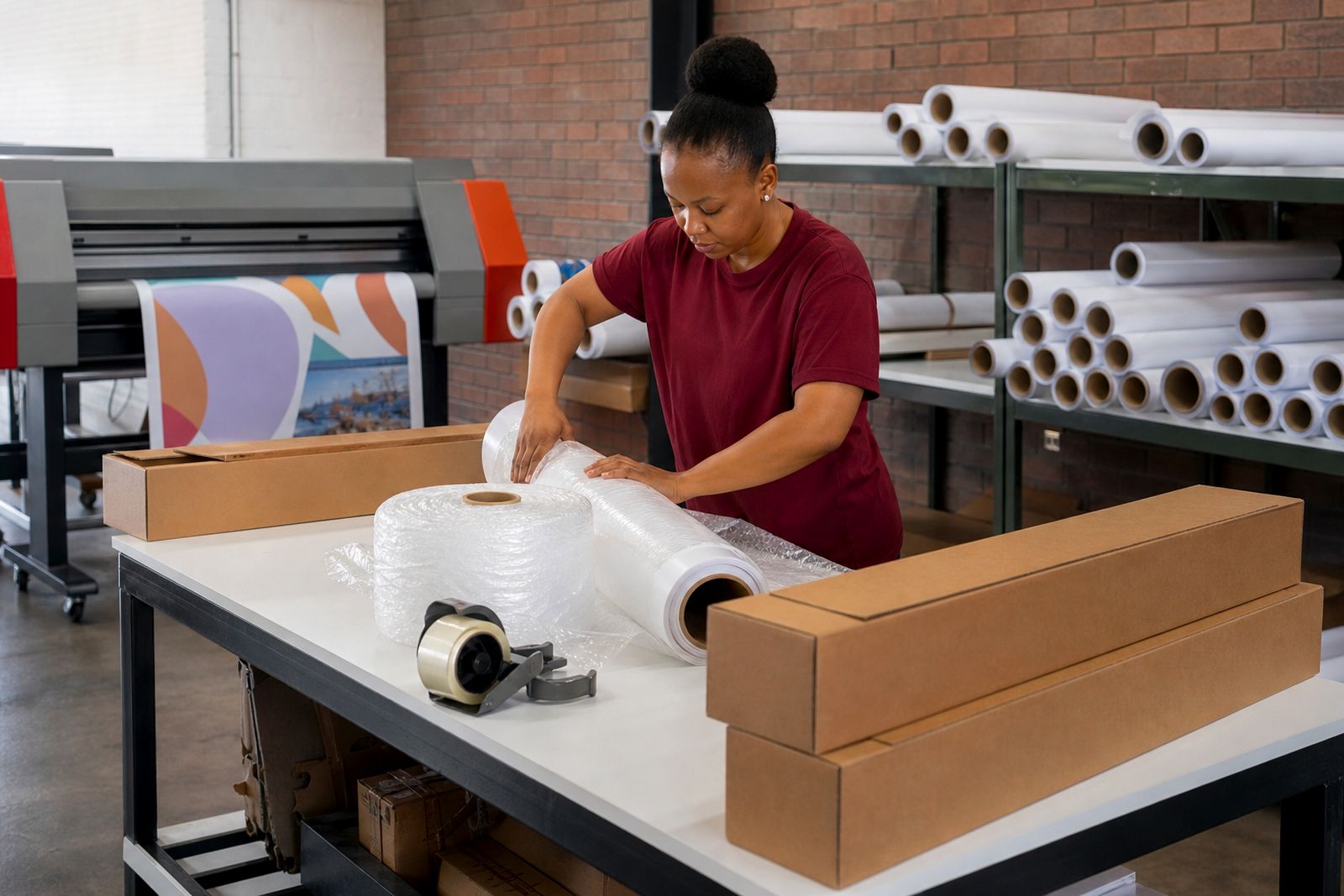
Courier cost is separate from the media itself and depends on where the rolls are going in South Africa and how many are in the consignment. A sign shop taking several rolls for routine production will often cost out differently from a hobbyist needing one specialised width. We do not work from a one-roll-fits-all sheet because print shops, artists and makers use these materials in very different ways.
If you are comparing options, ask us to quote the vinyl and laminate combination together. That gives you a truer view of the job cost, especially for outdoor work where the top film is part of the finished spec.
Aftercare on the print bench and on site
Compatibility does not end when the carton arrives. Print settings, heater levels, ink load and drying or curing all affect the final result. Solvent and eco-solvent output may need proper outgassing before lamination. Latex prints benefit from enough time off the machine before tight finishing schedules. UV output needs a cure level that anchors well without making the surface brittle on the wrong film.
Store rolls clean and upright or as recommended for your setup, away from excessive heat and direct sun. Let media acclimatise in the print room before use if it has travelled through colder or hotter conditions. During application, make sure the substrate is properly cleaned and suitable for the adhesive class you selected. A good vinyl on a dusty panel will still fail, simple as that.
If you are uncertain after a small test print, tell us what you saw: silvering under laminate, slow solvent release, edge lift on the wall or poor ink anchorage on a clear film. We can usually steer you to a more suitable category for the next run.
What our Printable Vinyl customers say
Verified Google reviews
Questions we get asked
Can you tell me which vinyl suits a latex printer?
Yes. Tell us the printer family, the job type and whether you plan to laminate, and we will point you to a suitable printable vinyl category and width.
Do you supply printable vinyl for clear window graphics?
We do. Clear printable vinyl is available, and we can advise where it suits the job best, including whether a laminate is sensible for handling or weather exposure.
Do you print the graphics or sell the printer as well?
No. We supply the printable self-adhesive vinyl rolls and matching cold overlaminates, with guidance on compatibility for your existing wide-format printer.
Also worth a look
Tell us about the job
Send sizes, materials and where you are through our contact form, and we will come back with the practical options.
Open the contact form